
Filling the water tank in your travel trailer may seem simple, but doing it right makes every trip smoother and safer. Whether you’re a new RV owner or have some experience, understanding the right steps, tools, and common pitfalls is essential.
Clean, reliable water is a must when camping—using your sink, shower, or toilet all depends on a full, safe water tank. This guide explains every step, shares practical tips, and helps you avoid mistakes that can lead to costly repairs or health issues.
Let’s make sure your travel trailer water system is always ready for your next adventure.
How The Travel Trailer Water Tank System Works
Your travel trailer has a freshwater tank that stores clean water for drinking, cooking, and washing. Most tanks hold between 20 and 80 gallons, depending on your trailer size. A 12-volt water pump sends water from the tank to your faucets, shower, and toilet when you’re not connected to city water.
There are usually three tanks in most travel trailers:
- Freshwater tank: Holds clean water.
- Gray water tank: Collects used water from sinks and showers.
- Black water tank: Stores toilet waste.
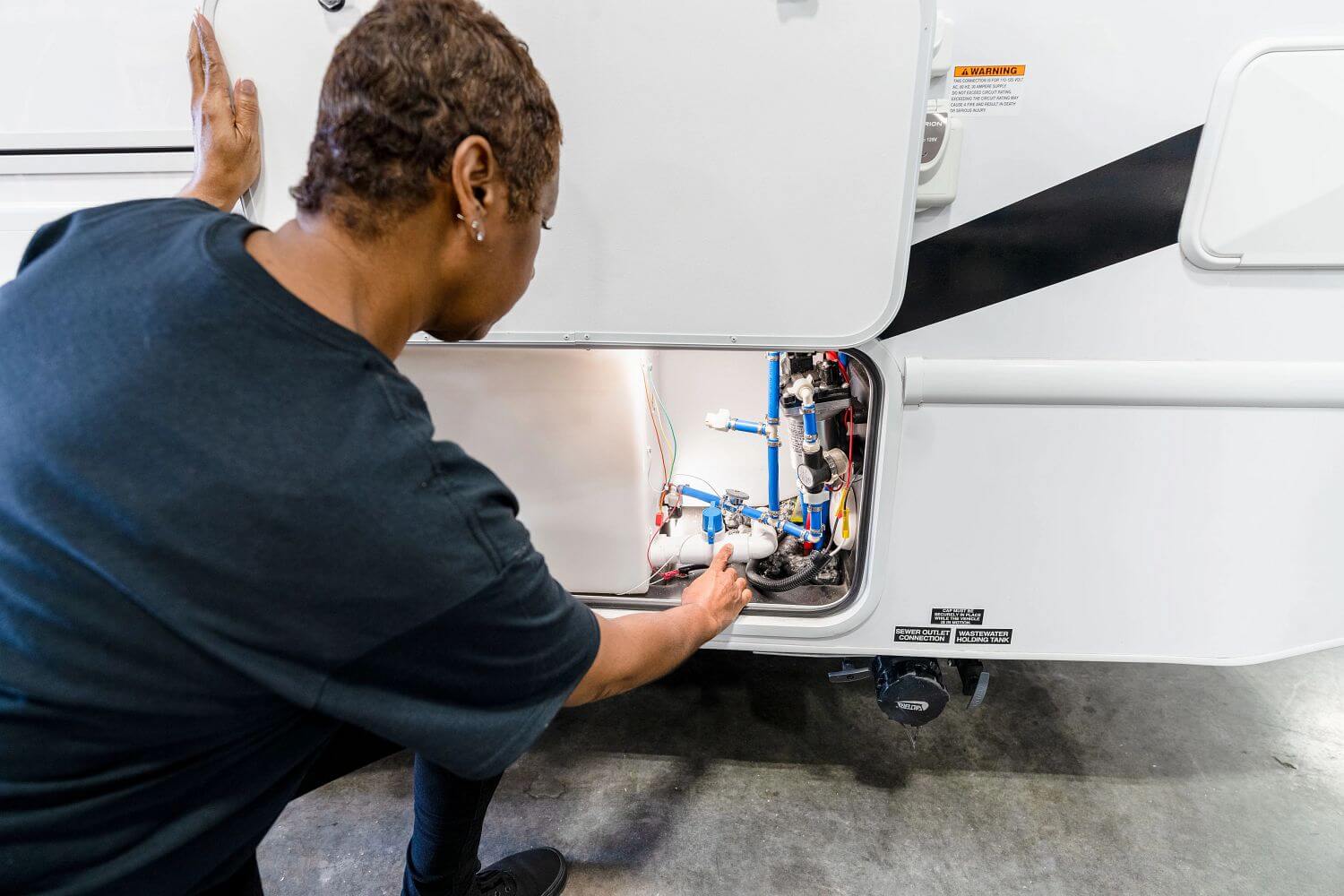
Understanding these basics will help you avoid filling or draining the wrong tank by mistake. Always locate your freshwater fill port, usually marked as “Fresh Water” and often placed on the side of your trailer.
What You Need Before You Start
Filling your tank safely requires some tools. Using the right equipment helps prevent contamination and makes the process faster.
- Drinking water safe hose: Regular garden hoses can add harmful chemicals or bad taste to your water. Get a hose labeled for “potable water use.”
- Water pressure regulator: Protects your trailer’s plumbing from high pressure, especially when filling at RV parks.
- Inline water filter: Reduces sediment, chlorine, and bacteria. Even if the campground claims clean water, a filter helps.
- Hose elbow or connector: Helps avoid kinks and makes attaching the hose easier.
- Tank cleaning wand or sanitizer: Not needed every time, but cleaning the tank regularly is important for health.
Many beginners skip the water pressure regulator. This mistake can lead to burst pipes or leaks, especially in older trailers. Investing in these simple tools saves money and headaches.
Step-by-step: How To Fill A Travel Trailer Water Tank
Filling the tank is not just about running water until it overflows. Follow these steps for a safe, efficient fill every time.
1. Park On Level Ground
Always park your trailer on level ground before filling. This ensures the tank fills evenly and the water sensor works correctly. If the trailer is tilted, you may get a false reading, thinking the tank is full when it’s not.
2. Locate The Freshwater Fill Port
Look for the freshwater fill port on the outside of your trailer. It’s often a white or blue cap, sometimes marked with a label. Make sure you’re not using the “city water connection,” which is for direct hookup at campsites.
3. Attach The Drinking Water Hose
Connect one end of your drinking water safe hose to the water source, and the other to your fill port. Attach the water pressure regulator to the faucet side if you’re using pressurized water.
4. Use An Inline Water Filter (optional But Recommended)
If you have an inline filter, connect it between the faucet and your hose. This step is important, especially if the water source is unfamiliar or from a public campground.
5. Start Filling Slowly
Turn on the water source slowly. Filling too fast can cause air bubbles, splashing, or even damage. Listen for a gurgling sound—this means the tank is filling. Most tanks will take 5–20 minutes to fill, depending on the size and pressure.
6. Watch For Overflow Or Monitor Tank Level
Keep an eye on the overflow vent (usually under the trailer near the tank). When water starts coming out, the tank is full. Some trailers have a tank monitor panel inside, but these sensors can be inaccurate if they’re dirty or old.
7. Shut Off Water And Detach Hose
Turn off the water source before disconnecting. Cap the fill port to keep dirt and insects out. Roll up your hose and store it separately from your sewer hoses.
8. Prime Your Water Pump
Turn on a faucet inside the trailer for a few seconds to let air escape and fill the water lines. This also helps check for leaks or low pressure.
Tips For A Cleaner, Safer Fill
Many RVers forget that water tanks can harbor bacteria or algae if not cleaned. Here’s how to keep your system safe:
- Sanitize the tank every 2–3 months with a bleach solution or RV tank sanitizer.
- Let water run for a few minutes before drinking, especially after filling from a new source.
- Store hoses in a clean, dry place—not with sewer equipment.
- Use a dedicated hose for fresh water only.
Pro tip: If you notice a “plastic” or “musty” taste, it’s usually from a dirty tank or hose. Regular cleaning prevents this.
Boondocking: Filling Without A Water Hookup
If you’re camping off-grid (boondocking), you may need to fill your tank with portable containers or at a dump station.
- Use a clean, food-grade water jug (3–7 gallons works best for lifting).
- Bring a small 12V transfer pump or a funnel to pour water into the fill port.
- Always filter water if you’re unsure about the source.
Non-obvious insight: When boondocking, plan your water usage carefully. Many people overestimate how long a tank will last. A family of four can use 20–30 gallons per day just for basic needs.
Common Mistakes And How To Avoid Them
Even experienced RVers can make errors. Here are the most frequent problems and how to prevent them:
- Using a regular garden hose: This can add lead, chemicals, and bad taste.
- Forgetting the water pressure regulator: High pressure can burst lines or damage appliances.
- Mixing hoses: Never use the same hose for black or gray water tanks and fresh water.
- Overfilling the tank: Water can spill into the trailer or damage sensors.
- Not sanitizing regularly: Bacteria can grow quickly, especially in warm climates.
Credit: blog.campingworld.com
Comparing Water Tank Materials
Not all travel trailer tanks are made the same. Here’s a quick look at the most common materials:
| Material | Durability | Taste Impact | Maintenance Needed |
|---|---|---|---|
| Polyethylene (plastic) | High | Low (if cleaned) | Regular cleaning |
| Stainless steel | Very high | None | Low |
| Aluminum | Medium | Possible metallic taste | Check for corrosion |
Most trailers use polyethylene tanks—these are affordable and easy to clean but can develop a plastic taste if not sanitized.
How To Check Water Level Accurately
Relying on tank sensors alone isn’t always best. Here’s how different methods compare:
| Method | Accuracy | Reliability | Ease of Use |
|---|---|---|---|
| Built-in monitor panel | Medium | Sometimes inaccurate | Very easy |
| Physical check (look for overflow) | High | Very reliable | Easy |
| Aftermarket electronic sensors | Very high | Reliable if clean | Moderate |
Non-obvious insight: Sensors often read “full” or “empty” if dirty. Cleaning sensors with a special tank solution can restore accuracy without expensive repairs.
How Often Should You Fill The Water Tank?
There’s no single answer—it depends on your usage, the number of people, and whether you have hookups.
- For a couple, a 40-gallon tank may last 3–5 days with careful use.
- For a family, the same tank might last 1–2 days.
- If you have regular hookups, you may never need to fill the tank, just use the city water connection.
Tip: Always fill your tank before heading to a remote area. Even if you plan to use hookups, sometimes the water is shut off or unreliable.
Troubleshooting Water Fill Problems
Sometimes, things don’t go as planned. Here are some quick solutions:
- Water won’t go in: Check for a blocked vent line or kinked fill hose.
- Water leaking under trailer: Look for loose hose connections or a cracked tank.
- Low water pressure: Check the pump filter, inline filter, or for leaks.
- Strange taste or smell: Sanitize the tank and hose, and change your water source if needed.
If you can’t solve a problem, it’s best to consult your trailer’s manual or contact a certified RV technician.
Water Conservation Tips For Travel Trailers
Especially important for boondocking, these tips help your water last longer:
- Take “Navy showers” (turn off water while soaping).
- Use disposable plates and utensils to reduce washing.
- Collect rinse water for flushing the toilet.
- Fix drips and leaks promptly.
Most RVers find they can cut water use by half just by changing a few habits.
Storing Your Travel Trailer With Water
Many people wonder if they should leave water in the tank when storing their trailer. It’s best to drain the tank completely before long-term storage. This prevents bacteria growth, algae, and freezing damage in winter.
If storing for just a few days, run water through the system and add a small amount of RV-safe antifreeze in cold weather.

Credit: www.amazon.com
When To Use The City Water Connection
Most campgrounds have a city water hookup. When connected, you don’t need to use the onboard tank. Just attach your drinking water hose to the city water port and turn on the supply.
But always use a pressure regulator—some campground water can be as high as 100 psi, which can burst RV pipes. If there’s a problem with campground water (like a boil order), switch to your onboard tank until it’s safe.
For more details on RV water systems, the Recreational vehicle Wikipedia page offers a good overview.
Frequently Asked Questions
How Often Should I Sanitize My Travel Trailer Water Tank?
You should sanitize your water tank at least every 2–3 months or after using questionable water sources. If your trailer has been stored for a long time, sanitize before your next trip.
Can I Fill My Tank With Bottled Water Or Jugs?
Yes, you can use bottled water or jugs if you don’t have a hose connection. Use a clean funnel and make sure the containers are food-grade to avoid contamination.
Why Does My Water Taste Or Smell Bad After Filling?
This often happens from old hoses, a dirty tank, or not sanitizing regularly. Flush the system and clean the tank with a bleach solution or RV sanitizer.
Do I Need To Use A Filter When Filling The Tank?
While not required, using an inline water filter is highly recommended. It removes sediment, chlorine, and bacteria, making your water safer and better tasting.
Can I Travel With A Full Water Tank?
You can travel with a full tank, but remember water is heavy (about 8.3 lbs per gallon). This can affect your trailer’s weight and fuel efficiency. Only fill the tank if you need water at your destination or are going off-grid.
Filling your travel trailer water tank is a simple task once you know the right steps and tools. Taking the time to do it safely ensures clean water, prevents damage, and makes every camping trip more comfortable. With a little preparation and these tips, you’ll always be ready for your next journey.
Safe travels!

Credit: www.rvwithtito.com