

Travel changes many things—your schedule, your environment, and sometimes even your body’s routine. If you take medicine every day, adjusting medication times during travel can be confusing and stressful. It’s not just about setting reminders; it’s about understanding how time zones, flights, and different routines affect your doses. Managing this well means you stay healthy on the go. Let’s explore how to adjust medication times when traveling so you can enjoy your trip and keep your treatment safe and effective.
Why Medication Timing Matters
Medicine works best when you take it at the right time. This is especially true for medicines like insulin, blood pressure pills, or antibiotics, where timing affects how the drug works in your body. Changing your schedule suddenly can cause missed doses, double doses, or unwanted side effects.
Many medicines rely on a consistent schedule to maintain proper levels in your system. For example, missing a dose of thyroid medication can affect your energy, while irregular heart medicine doses can cause serious health risks. Even simple pain relievers might be less effective if taken at the wrong time.
Understanding Time Zone Changes
Traveling across time zones is the biggest challenge for adjusting medication times. If you fly from New York to London, you cross a 5-hour time difference. So, your 8 AM pill in New York becomes 1 PM in London. This shift can confuse your schedule.
How Time Zones Affect Medication
- Short trips (1–2 days): You may not need to change your routine. Keep taking your medicine on your home schedule.
- Long trips (3+ days): You should adjust to local time to avoid confusion and keep your schedule consistent.
- Crossing multiple zones: Gradually shift your medication times over a few days if possible.
Example: East To West Travel
If you go from Paris (Central European Time) to Los Angeles (Pacific Time), you gain 9 hours. Your evening medicine at 9 PM Paris time would be 12 PM in LA. You must decide whether to stick to your usual time or adjust to local time.
Preparing Before Your Trip
Planning ahead makes adjusting medication times much easier. Here’s what you should do before you travel:
- Talk to your doctor: Ask if your medication schedule can be safely changed. Some drugs are sensitive to timing.
- Write down your routine: Keep a list of medicine names, dosages, and usual times.
- Pack enough medicine: Bring extra in case of delays.
- Bring a pill organizer: It helps keep track during busy travel days.
- Check storage needs: Some medicines need refrigeration.
- Set reminders: Use your phone or a travel alarm.
Sample Pre-travel Checklist
- Confirm medicine names and dosages
- Get enough for the whole trip, plus a few extra days
- Ask doctor about adjusting times
- Pack backup (paper) prescriptions
- Prepare storage (cool packs if needed)
- Update your phone’s clock to destination time
Adjusting Medication On Travel Days
Travel days are tricky because you may be in airports, on planes, or changing clocks. Here’s how to handle your medicine:
- Keep medicine in carry-on bags: Never put essential drugs in checked luggage.
- Stick to your home time for short flights: For flights with little time change, keep your regular schedule.
- For big time changes, adjust gradually: If you cross more than 3 time zones, shift your timing by 1–2 hours per day, if possible.
Example: Shifting Times
If you take a pill at 8 AM every day and you travel to a place 6 hours ahead, take your pill at 10 AM for three days, then 12 PM, then finally at 2 PM (local time). This reduces sudden changes and helps your body adjust.
Practical Tips For Common Medications
Different types of medicine require different strategies. Here’s how to adjust some common ones:
Diabetes Medicine
Insulin and other diabetes medications need careful timing. Rapid changes may cause low or high blood sugar. Talk to your doctor about how to adjust times and doses when crossing time zones.
Blood Pressure And Heart Medicine
Take your medicine as close to your usual time as possible. If you miss a dose, take it as soon as you remember, unless it’s almost time for the next dose. Never double up without asking your doctor.
Birth Control Pills
Consistency is key. If you travel east (lose hours), take your pill earlier. If you travel west (gain hours), take it later. Missing a pill by a few hours is usually fine, but more than 24 hours can affect effectiveness.
Antibiotics
Stick to your schedule. Missing doses can make antibiotics less effective and lead to resistance. Set reminders and pack extra in case of delays.
Data: Medication Types And Adjustment Risk
To help you plan, here’s a comparison of common medication types and their risks when adjusting times:
| Medication Type | Timing Sensitivity | Adjustment Risk |
|---|---|---|
| Insulin | Very High | High risk of blood sugar swings |
| Blood Pressure | Medium | Possible blood pressure fluctuations |
| Antibiotics | High | Risk of resistance if doses missed |
| Birth Control | High | Reduced effectiveness if missed |
| Thyroid | Medium | Energy/weight changes |
| Pain Relief | Low | Reduced pain control |

Credit: superbusymum.net
Common Mistakes Travelers Make
Many travelers make errors that can affect their health. Here are some mistakes to avoid:
- Not planning ahead: Forgetting to ask your doctor about changes.
- Packing medicine in checked bags: Lost luggage means lost medicine.
- Ignoring time zone changes: Taking medicine at the wrong time.
- Not bringing enough medicine: Running out during the trip.
- Missing doses during travel chaos: Busy days can lead to missed pills.
Example: Missed Dose Stress
A traveler flying from Tokyo to Los Angeles forgot to adjust her insulin schedule. She took it too early and experienced low blood sugar. With advance planning, she could have shifted her times gradually.
How To Use Technology For Medication Reminders
Smartphones and apps can help you manage medication times across time zones. Set reminders in local time, and update your phone’s clock when you arrive. Apps like Medisafe or MyTherapy let you track doses and alert you if you miss one.
Tips For Using Apps
- Update time zone settings: Make sure your app uses local time.
- Input all medications: Track each medicine separately.
- Enable notifications: Get alerts on your phone or smartwatch.
Table: Travel Scenarios And Medication Strategies
To make things clearer, here’s a table comparing different travel scenarios and the best medication strategies:
| Travel Scenario | Time Zone Change | Recommended Strategy |
|---|---|---|
| Short flight (1–2 hours) | Minor | Keep regular schedule |
| Long-haul flight (6+ hours) | Major | Gradually shift times |
| Multi-city trip | Multiple | Use reminders, adjust to local time |
| International cruise | Varies | Consult doctor, monitor closely |
| Business trip (short stay) | Minor | Stick to home time |
Special Considerations For Older Adults And Children
Older adults and children often need more help adjusting medication times. They may forget doses or have trouble understanding new schedules. Caregivers should use pill organizers, written schedules, and reminders. If traveling with children, double-check dosages and bring extra supplies.

Credit: www.thedestinlog.com
Non-obvious Insights And Practical Guidance
Many travelers don’t realize that jet lag can affect how your body absorbs medicine. If you feel tired or sick after a long flight, your digestion and absorption may change. Drink plenty of water, eat healthy, and avoid alcohol, which can interfere with some medicines.
Another insight: Some medicines have window periods. For example, thyroid medicine works best when taken on an empty stomach. If your meal times change, adjust accordingly.
If you travel often, keep a travel medicine kit with a printed schedule, doctor contacts, and extra doses. This helps in emergencies and makes adjustments easier.
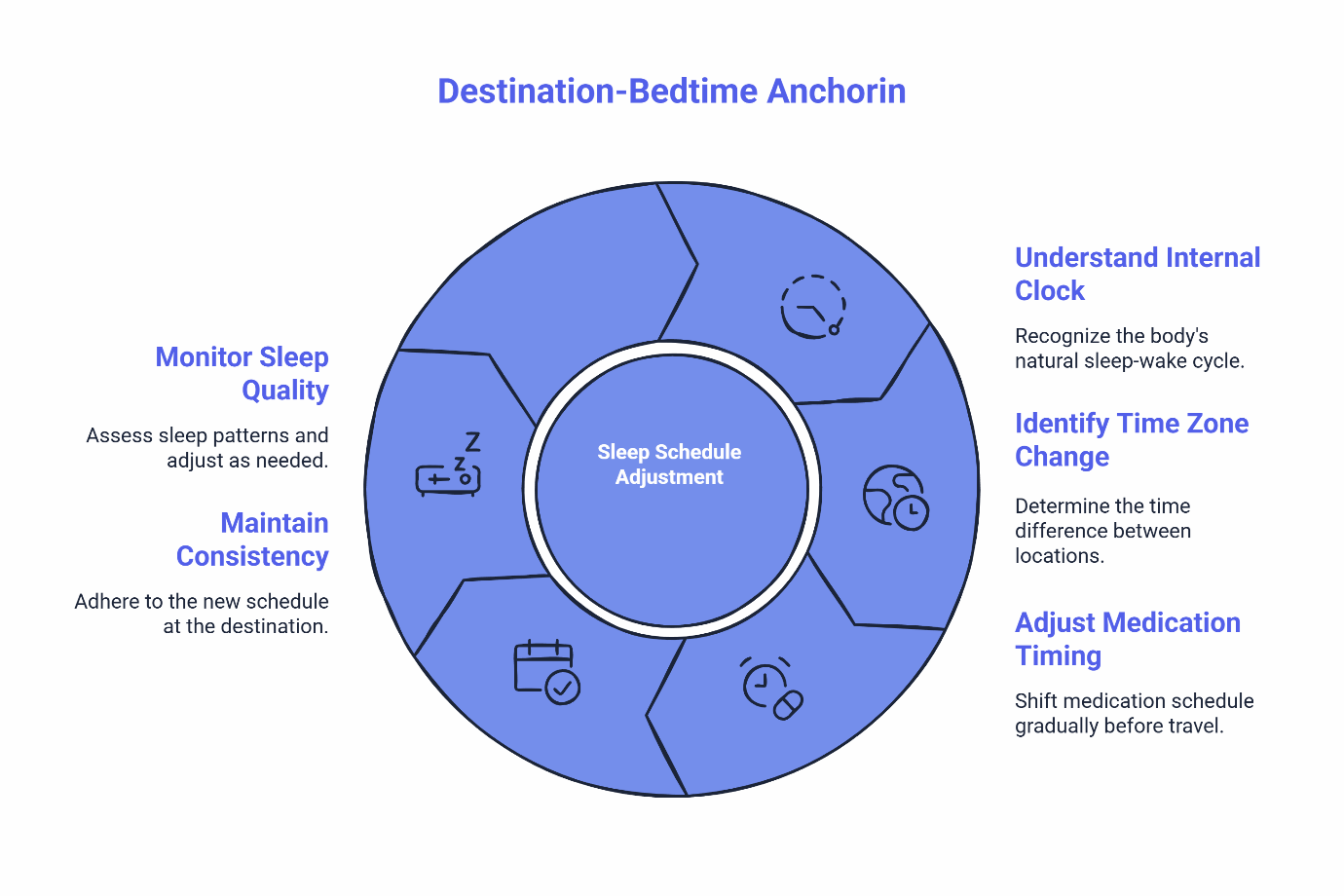
Table: Steps For Adjusting Medication Times
Here’s a step-by-step guide for medication adjustment:
| Step | Action | Tip |
|---|---|---|
| 1 | Consult your doctor | Discuss time zone changes and risks |
| 2 | Record your schedule | Write down times and doses |
| 3 | Pack essentials | Bring organizer, extra medicine |
| 4 | Shift times gradually | Adjust 1–2 hours per day |
| 5 | Use reminders | Set alerts on phone or watch |
| 6 | Monitor health | Watch for side effects |
Credit: sleepscriptmd.com
When To Seek Help
If you experience side effects, missed doses, or confusion about your medication, contact your doctor right away. Most countries have pharmacies or clinics that can help, but bring your prescription and a translated list of your medicines. For more information on safe travel with medicine, visit CDC Traveler’s Health.
Enjoying Your Trip Safely
Travel should be fun, not stressful. Adjusting medication times is just one part of planning, but it’s important for your health. With a clear plan, reminders, and understanding of your medicine, you can manage your routine and enjoy new experiences.
Frequently Asked Questions
How Do I Adjust Medication Times For A 6-hour Time Zone Difference?
Gradually shift your medication schedule by 1–2 hours per day until you reach the new local time. If you take medicine at 8 AM, move to 10 AM, then 12 PM, then 2 PM over several days. Always check with your doctor before making changes.
Is It Safe To Take Medicine During A Flight?
Yes, but keep your medicine in your carry-on bag. Take your dose at the scheduled time, even if you’re on the plane. Drink water and avoid alcohol, as it can affect some medicines.
What If I Miss A Dose While Traveling?
Take the missed dose as soon as you remember, unless it’s almost time for your next dose. Never double up unless your doctor says it’s safe. If you miss more than one dose, contact your doctor.
Can Technology Help Me Manage Medication Times?
Absolutely. Use apps like Medisafe or MyTherapy to set reminders and track your doses. Make sure your app’s clock is set to the local time zone.
Should I Adjust Medicine Times For Short Trips?
For trips lasting 1–2 days, you usually don’t need to change your routine. Stick to your home schedule. For longer trips, adjust to the local time to keep your routine consistent.
Planning ahead, using reminders, and understanding your medicine’s needs help you stay healthy and enjoy your travels. With a little preparation, you’ll find that adjusting medication times is simple and stress-free.