


Traveling can be exciting, but for those who take daily medication, it brings a unique challenge: how do you adjust your medication times when crossing time zones? Taking medicine at the wrong hour—even by a few hours—can reduce its effectiveness or even cause side effects. Whether you use insulin, birth control, heart medication, or other time-sensitive drugs, it’s important to plan ahead. This guide will help you travel safely, avoid missed doses, and keep your health on track, no matter where the journey takes you.
Why Medication Timing Matters
Many medications work best when taken at the same time each day. This keeps the amount of medicine in your body steady. For example, skipping or doubling up on blood pressure pills can cause headaches, dizziness, or heart risks. For people with diabetes, changing insulin timing can cause dangerous swings in blood sugar.
A few medications (like some antibiotics or antidepressants) must be spaced evenly. Others, like painkillers, can be more flexible. Knowing which type you take is the first step.
Preparing Before Your Trip
It’s easier to avoid problems if you plan ahead. Here’s what to do before you leave:
- Talk to Your Doctor or Pharmacist: Tell them about your travel plans, including time zones, flight length, and arrival time. Ask if your medication times need to change, and how to adjust safely.
- Make a Medication List: Write down each medicine, its dose, the time you usually take it, and any special instructions. Keep this list with you.
- Carry Extra Medication: Bring enough for your trip plus a few extra days. Delays happen. Always keep medication in your carry-on, not checked luggage.
- Check Country Rules: Some countries have strict laws on drugs, even common ones. Check with the embassy or airline to avoid problems at customs.
Insight: Many travelers forget that a doctor’s note (with generic and brand names) can help if security asks questions. Also, ask for a prescription in case you lose your supply.

Credit: superbusymum.net
Understanding Time Zones And Medication
The main challenge is crossing multiple time zones. Your body’s “clock” stays on home time for a while, but your schedule changes instantly. If you don’t adjust, you could take medicine too close together (risking overdose) or too far apart (losing its effect).
How Time Zones Affect Dosing
Suppose you fly from New York to London. That’s a 5-hour time difference forward. If you always take a pill at 8 AM in New York, it’s already 1 PM in London.
Now, imagine your medicine must be taken every 24 hours. Should you stick with New York time, or switch to London time? The answer depends on the medicine.
General Strategies For Adjusting Medication Times
There’s no one-size-fits-all answer, but these strategies cover most situations:
- Gradual Adjustment: In the days before travel, shift your medication time by 1-2 hours each day toward your new time zone. This works well for long-acting drugs.
- Immediate Switch: For some medicines, you can take your usual dose before flying, then switch to the new local time after arrival. This is common for once-daily medicines.
- Split the Difference: Take a dose before you leave, then your next dose halfway between your old and new time. Continue at the new local time from then on.
- No Adjustment Needed: For as-needed medication (like painkillers), just take them when you need them.
Example: If you take your blood pressure medicine at 7 AM in Tokyo and fly to Paris (7-hour difference), take your last Tokyo dose as usual, then the next dose 24 hours later, but at 7 AM Paris time. If the gap is too long or short, split the hours between doses.
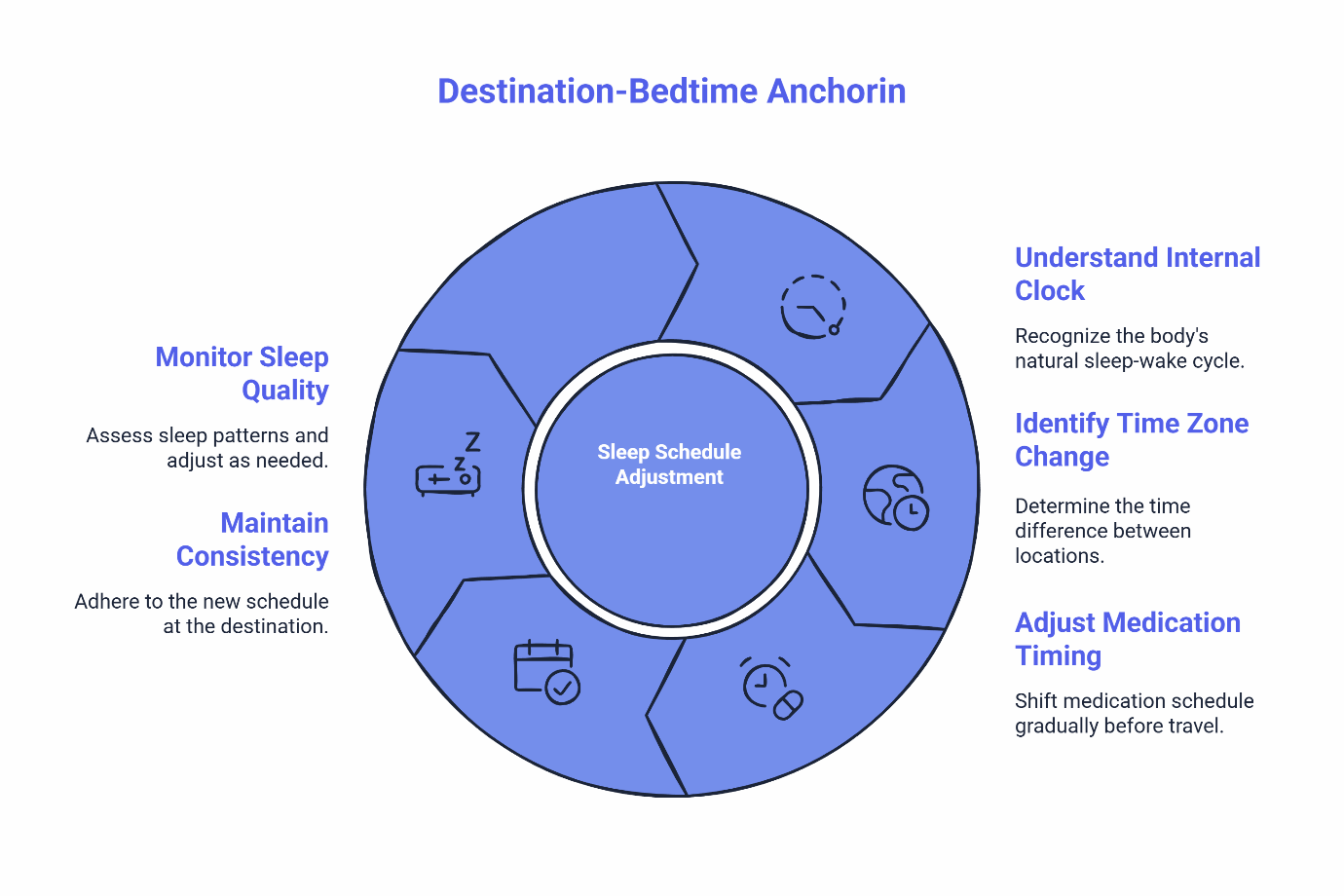
Credit: sleepscriptmd.com
Special Considerations For Different Medication Types
Not all medicines should be adjusted the same way. Here’s a closer look:
Insulin And Diabetes Medication
For people with diabetes, timing is critical. Missing a dose or taking it too close can cause low or high blood sugar.
- Short-acting Insulin: Adjust with meals, which may shift during travel. Always carry snacks in case of delays.
- Long-acting Insulin: Gradually adjust the time by 1-2 hours each day before or after travel. If the difference is large, ask your doctor for a special plan.
Birth Control Pills
Taking birth control at the same time each day is key, especially for progestin-only pills.
- If you travel east and “lose” hours, take your pill earlier to avoid missing a dose.
- If you travel west and “gain” hours, your window is longer, but don’t go more than 24 hours between doses.
Tip: Set an alarm on your phone for the new time zone as soon as you land.
Heart Medications
For drugs like beta-blockers or blood thinners, don’t double up or skip doses. If the time between doses is too short, wait a few hours extra rather than taking two close together.
Seizure Medications
Missing a dose can trigger a seizure. It’s often safest to adjust slowly over a few days, spacing doses by a few more or less hours each day until you’re on the new schedule.
Non-obvious insight: Many people don’t consider jet lag—being tired or confused can make you forget a dose. Use reminders or pill boxes.
Practical Steps For Managing Medication When Traveling
A clear plan reduces stress and mistakes. Follow these steps:
- Set Two Clocks: Keep one watch on home time and one on local time for the first day or two. This makes it easier to know when your next dose is due.
- Use Pill Organizers: Fill a pill case with enough medicine for each day. Check off each dose.
- Set Alarms: Use your phone, watch, or special medication apps to remind you, especially if you’re tired or distracted.
- Record Each Dose: Mark down when you took each dose to avoid double dosing.
- Stay Hydrated: Flying can dehydrate you, which affects how the body absorbs medicine.
Pro tip: If your flight is overnight, set an alarm in your phone to vibrate quietly so you don’t miss a dose while sleeping.

Credit: www.thedestinlog.com
Example Adjustments For Common Time Zone Changes
Here are practical examples for a 6-hour time zone change, both eastward and westward.
| Scenario | Home Time | Destination Time | Adjustment |
|---|---|---|---|
| Eastward (e.g. New York to Paris, +6h) | 8 AM | 2 PM | Take your medicine a little earlier each day before travel, or switch to 8 AM Paris time the next morning |
| Westward (e.g. Paris to New York, -6h) | 8 AM | 2 AM | Take your medicine a bit later each day before travel, or take your dose at 8 AM New York time after arrival |
When You Should Not Adjust Medication Times
Some medicines are very sensitive to timing changes. Don’t try to adjust if:
- Your doctor tells you to stick to your home schedule
- You use certain anti-rejection drugs after a transplant
- Your medicine has a narrow “therapeutic window” (small difference between helpful and harmful)
- You recently changed your dose
Important insight: If you’re unsure, always ask your doctor or pharmacist. Trying to adjust alone can cause harm.
Dealing With Long Flights And Layovers
Long flights add another layer of complexity. You might cross several time zones and have stopovers.
Tips For Long Flights
- Bring a Written Schedule: Write down when to take each dose, using both home and destination times.
- Ask for Help: Flight attendants can remind you or provide water.
- Avoid Alcohol: It can interact with medicine and worsen side effects.
- Keep Medicine Handy: Never store medicine in checked bags, which can be lost or delayed.
Overnight Flights And Sleep
If your medicine must be taken at a certain time, you may need to wake up during a flight. Some travelers set alarms or ask a travel partner for help.
Example: If you take a medicine every 12 hours, and your flight lasts 10 hours, take a dose before boarding and another at the scheduled time during the flight.
Common Mistakes And How To Avoid Them
Travel can be distracting. These are mistakes people often make:
- Forgetting to Adjust: Many travelers stick to their old schedule and end up with doses too close or too far apart.
- Missing Doses: Busy sightseeing or jet lag leads to skipped medication.
- Taking Double Doses: Confusing time zones can cause accidental double dosing.
- Not Packing Enough Medicine: Flights get delayed. Always carry extra.
- Ignoring Side Effects: New schedules can cause drowsiness or upset stomach. Watch for unusual symptoms.
Practical tip: Keep a medication diary. Write down each dose, the time, and any side effects.
Comparing Medication Adjustment Methods
Here’s a quick comparison of the most common adjustment methods:
| Method | When to Use | Pros | Cons |
|---|---|---|---|
| Gradual Shift | For long-acting drugs or big time zone changes | Gentle on the body, easy for most people | Takes planning, not always possible |
| Immediate Switch | For once-daily drugs, short trips | Simple, easy to remember | May cause a long gap or short overlap |
| Split the Difference | For medicines with flexible timing | Reduces risk of side effects | Requires math, can be confusing |
Using Technology To Stay On Track
Modern technology makes travel easier. Consider these tools:
- Medication Reminder Apps: Apps like Medisafe or MyTherapy help track doses across time zones.
- Smart Watches: Set multiple alarms for different time zones.
- Digital Pill Dispensers: Some devices beep or light up when it’s time for your medicine.
Non-obvious insight: Some apps allow you to share your medication schedule with family or your doctor, adding an extra safety net.
What To Do If You Miss A Dose
Mistakes happen, especially when you’re tired or distracted. If you miss a dose:
- Take it as soon as you remember, unless it’s almost time for your next dose.
- If it’s close to the next scheduled dose, skip the missed one—never double up without asking your doctor.
- Write down when you missed the dose and how you felt.
- If you miss more than one dose, call your doctor as soon as possible.
Additional Resources
For more detailed information, visit the CDC Travelers’ Health page. They offer up-to-date advice for people with medical needs.
Frequently Asked Questions
What’s The Safest Way To Adjust Medication Times When Flying?
The safest way is to plan with your doctor and adjust slowly if possible. Use alarms and written schedules to avoid confusion. For most medicines, a gradual shift works well, but some require special instructions.
How Do I Handle Medications That Must Be Taken With Food While Traveling?
Try to keep meal times as regular as possible, even on planes. Pack snacks like crackers or fruit. If meal service is delayed, ask a flight attendant for something small to eat with your medicine.
Should I Keep Taking My Medicine On Home Time Or Switch To The New Time Zone?
For short trips (less than 3 days), stay on home time. For longer trips, switch to the new local time using gradual adjustments. Always ask your doctor for medicine with strict timing.
Is It Dangerous To Adjust Medicine Times Without Medical Advice?
Yes. Some medicines are very sensitive to timing changes. Always check with your doctor or pharmacist before making changes, especially for heart, seizure, or transplant drugs.
What If I Lose My Medicine While Traveling?
Carry a prescription and doctor’s note with you. Visit a local pharmacy or clinic and show your documents. Having generic names, not just brand names, will help you get the right medicine.
Travel should be enjoyable, not stressful. By preparing ahead and using these strategies, you can safely adjust your medication schedule and focus on your trip. Always check with your doctor before making changes, and use reminders to keep your health on track wherever you go.
Safe travels!