
Pneumatic Vs Electric Tools: Which Is Better For Your Needs?
Choosing between pneumatic tools vs electric tools can feel overwhelming if you’re not a professional. Both types have shaped industries like construction, auto repair, and manufacturing. But which one fits your needs, budget, and work style? Let’s break down the real differences, look at the data, and uncover what many beginners overlook.
Understanding Pneumatic And Electric Tools
Pneumatic tools use compressed air to power their movement. Think of the loud hiss you hear at a car mechanic’s shop—those are likely pneumatic wrenches or drills. To use these tools, you need an air compressor, hoses, and the tool itself.
Electric tools run on electricity—either from a plug (corded) or a battery (cordless). You’ll find these in homes, workshops, and on job sites everywhere.
Both tool types can cut, drill, sand, or fasten. But they do this in different ways, with unique pros and cons.
Key Differences At A Glance
Let’s start with a direct comparison of the main features.
| Feature | Pneumatic Tools | Electric Tools |
|---|---|---|
| Power Source | Compressed Air | Electricity (Corded/Battery) |
| Weight | Lighter (tool only) | Heavier (motor/battery inside) |
| Maintenance | Regular oiling, air filter care | Less frequent, depends on tool |
| Initial Cost | Low tool cost, high compressor cost | Higher tool cost, no compressor |
| Portability | Limited by compressor/hose | High (especially battery models) |
| Durability | Very durable, fewer moving parts | Good, but more electronics to fail |
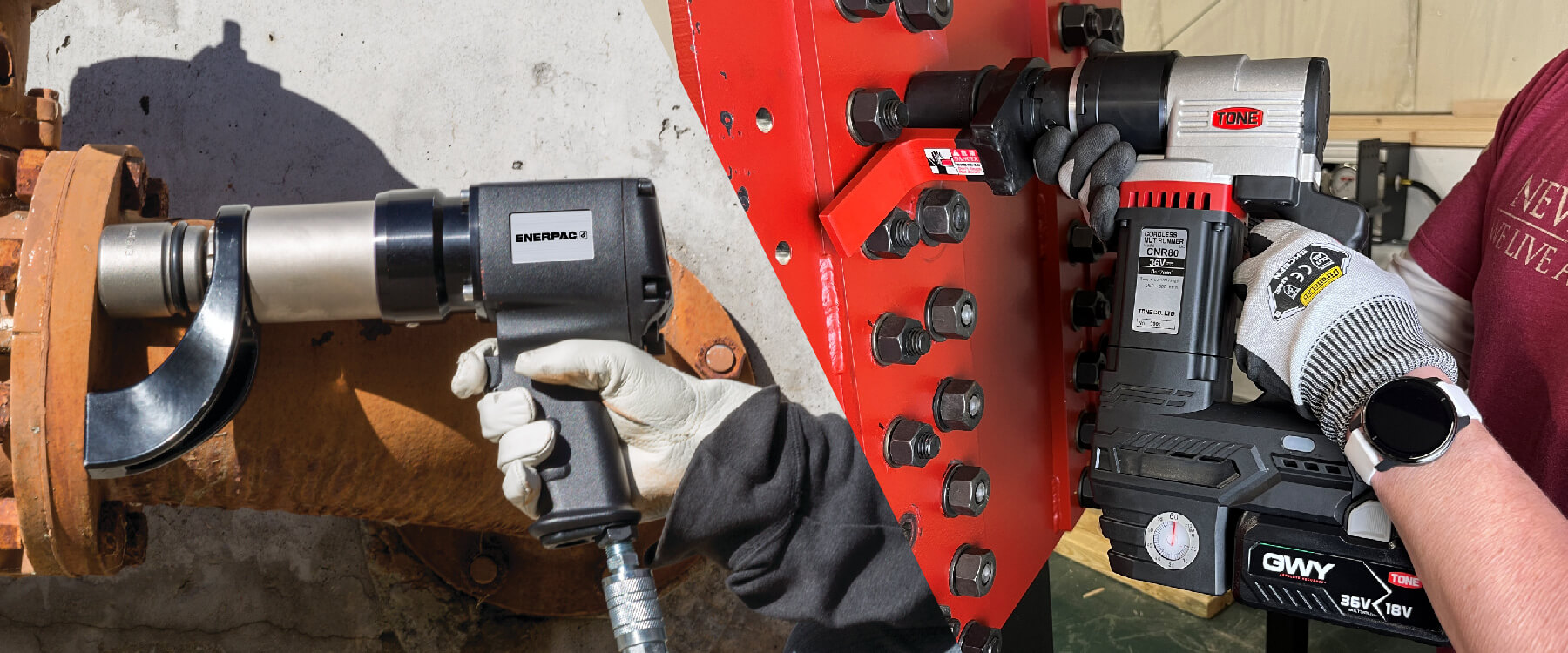
Credit: www.gwyinc.com
Power And Performance
Pneumatic Tools
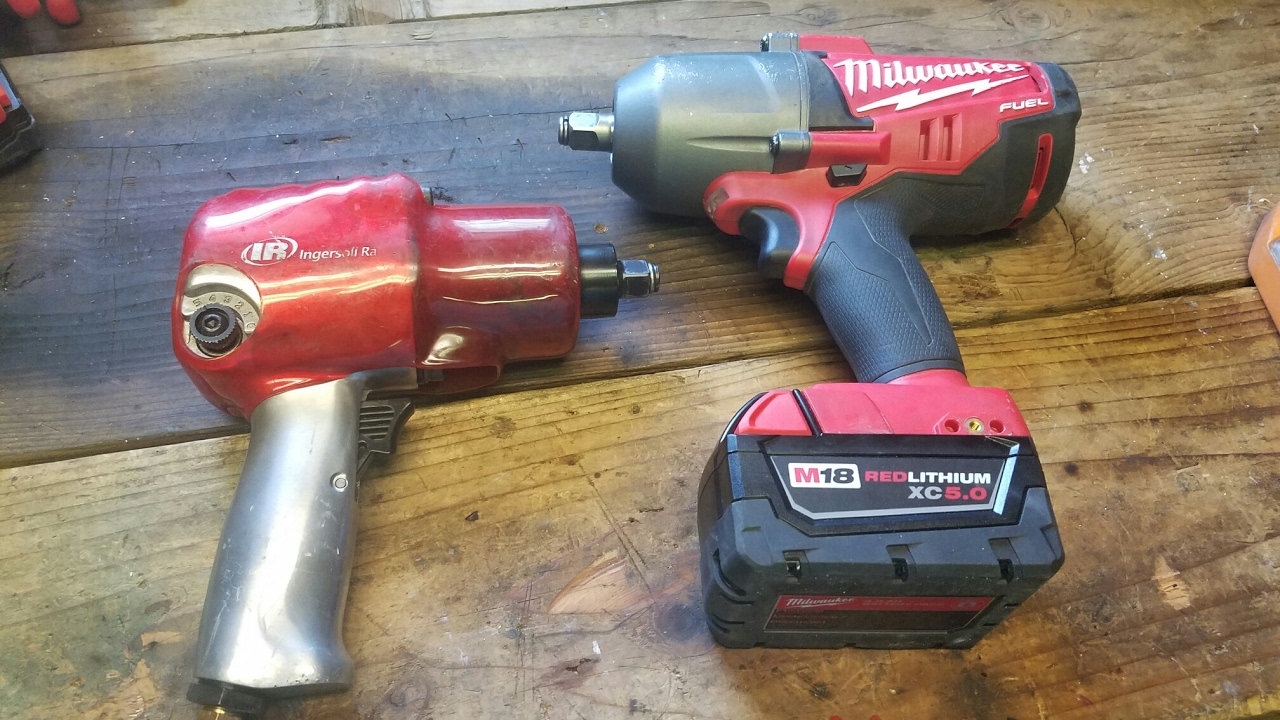
Pneumatic tools are known for raw power and continuous performance. For example, a pneumatic impact wrench can deliver over 1,200 ft-lbs of torque with ease—more than most electric models. This makes them ideal for tasks like:
- Removing stubborn bolts
- Heavy sanding or grinding
- Repetitive assembly work
A hidden advantage is no risk of overheating during long use. Since the motor is in the compressor, the tool itself stays cool and can run for hours.
Electric Tools
Electric tools have made huge advances. Modern brushless motors and high-capacity batteries allow cordless drills and saws to compete with air tools for many jobs. Yet, corded electric tools can overheat if pushed hard for a long time.
Electric tools are especially good for:
- Quick, light repairs
- Work far from power sources (cordless)
- Home DIY projects
A key insight: battery-powered models lose power as batteries drain. Pneumatic tools deliver consistent power as long as the compressor keeps up.
Cost: Upfront And Long-term
Let’s compare typical costs for a basic setup:
| Item | Pneumatic Tools | Electric Tools |
|---|---|---|
| Drill | $50–$100 | $60–$200 |
| Impact Wrench | $80–$180 | $100–$350 |
| Compressor | $150–$400 | Not needed |
| Batteries/Charger | Not needed | $50–$150 |
Pneumatic tools are often cheaper than electric ones, but the air compressor is a big upfront cost. If you plan to use many air tools, the compressor price spreads out over time. For one or two tools, electric options may be more economical.
Many beginners forget to budget for air hoses, fittings, and maintenance oil when starting with pneumatic tools.
Maintenance And Durability
Pneumatic Tools
These tools have fewer internal parts, so they rarely break down if cared for. However, you must:
- Oil them regularly (usually daily or weekly)
- Drain water from the compressor tank to avoid rust
- Change air filters to prevent dust and debris
Moisture in the air lines is a common problem. It can cause tools to rust inside if not managed. Using an air dryer or moisture trap helps, but adds cost.
Electric Tools
Electric tools need less frequent care, but they’re more sensitive to dust and drops. With cordless models, you must watch the battery health. Storing batteries in a hot car or using cheap chargers shortens their life.
Many electric tools now have brushless motors, which last longer and need less maintenance than older designs.
Portability And Convenience
Electric tools, especially battery-powered, are the clear winner for portability. You can carry them anywhere—up ladders, into attics, or outdoors—without dragging hoses or cords. This is why contractors and DIYers often prefer them for remote jobs.
Pneumatic tools tie you to the compressor. Hoses can trip you up and limit how far you can go. For large workshops or garages, this isn’t a problem, but working in tight spaces or on rooftops is a challenge.
One thing many people miss: air compressors are noisy—often 70–90 decibels, like a lawn mower. If you value a quiet work space, electric tools are better.
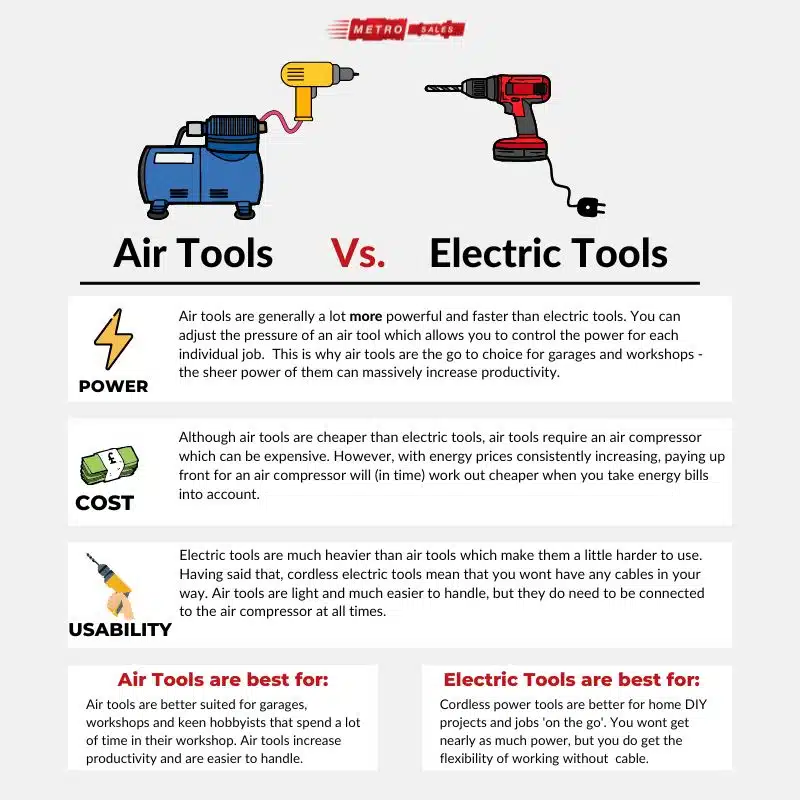
Credit: www.metrosales.co.uk
Safety And User Experience
Both tool types can be safe when used correctly, but each has unique risks.
- Pneumatic tools: Risk of hose whipping if it disconnects, and compressed air can be dangerous if misused.
- Electric tools: Risk of electric shock, especially if used near water or with damaged cords.
Beginners often overlook how air hoses can snag on objects, causing accidents or damaging work. Battery-powered tools avoid this risk.
Electric tools usually have more safety features, such as automatic shut-off, soft-start, and built-in brakes.
Versatility And Range Of Tools
The electric tool market is huge and growing fast. From drills and saws to polishers and garden tools, you’ll find electric options for almost every task. Many brands use a battery platform—one battery fits many tools.
Pneumatic tools shine in specialized tasks. For example, body shops use pneumatic sanders and sprayers for flawless paint jobs. Factories use air-powered nailers for high-speed assembly. If you need high torque or speed, pneumatic is hard to beat.
However, for general home use, electric tools cover almost every need.
Credit: www.youtube.com
Environmental Impact
Pneumatic tools use compressed air, but compressors need electricity—sometimes a lot. A 2 HP compressor can draw 1,500 watts or more when running. If left on all day, this adds up in energy use.
Electric tools, especially cordless, use less energy per job. Modern lithium-ion batteries are efficient and have a lower carbon footprint when used and recycled properly.
One less obvious point: air leaks in compressors and hoses waste energy, driving up electricity bills. Regularly checking for leaks is important but often forgotten.
When To Choose Pneumatic Tools
Pneumatic tools are best when:
- You need maximum power: They handle stubborn bolts, heavy sanding, or high-volume tasks better.
- You work in a fixed location: Garages and workshops where a compressor can stay in one place.
- You use many tools: One compressor can run multiple tools, saving money.
- You value durability: Air tools can last for decades with simple care.
When To Choose Electric Tools
Electric tools are the right choice if:
- You need portability: Working in different rooms, outdoors, or on ladders.
- You want convenience: No hoses, less setup, quieter operation.
- You do small or occasional jobs: Lower upfront cost, less maintenance.
- You want a wide range of tools: Easier to find specialty tools and accessories.
Real-world Examples
- Auto repair shops almost always use pneumatic impact wrenches. They need the power and speed for hundreds of bolts per day.
- Homeowners often prefer electric drills and saws. They’re easy to store, charge, and use anywhere.
- Carpenters on job sites rely on cordless nailers and saws. No need to haul a compressor onto a roof.
Common Mistakes To Avoid
- Ignoring total setup costs: Many new buyers forget that air hoses, fittings, and compressor oil add to pneumatic tool costs.
- Choosing power over practicality: Some buy powerful pneumatic tools for home use but rarely use them to full capacity.
- Neglecting maintenance: Skipping oiling or draining your compressor leads to early failure.
- Mixing brands and battery platforms: For electric tools, sticking to one brand saves money on batteries and chargers.
Which Is Right For You?
Ask yourself these questions:
- Where will you use the tool most—workshop, outdoors, around the house?
- How often will you use it—daily, weekly, or just a few times a year?
- Do you need maximum power or is convenience more important?
- What’s your budget for both tools and accessories?
If you need something for heavy-duty, everyday use, and don’t mind a learning curve, pneumatic tools are tough to beat. If you want ease, flexibility, and a tool that “just works,” electric tools are a smart bet.
For more technical details, the Wikipedia page on pneumatic tools gives a deeper dive into how these systems work.
Frequently Asked Questions
What Is The Main Advantage Of Pneumatic Tools Over Electric Tools?
Pneumatic tools deliver higher power and torque for their size, and they run cool even during long jobs. This makes them ideal for heavy, repetitive tasks in workshops or factories.
Are Electric Tools Safer Than Pneumatic Tools?
Both can be safe if used correctly, but electric tools often have more built-in safety features like automatic shut-off and brakes. Pneumatic tools require attention to hoses and air pressure risks.
Which Type Of Tool Is Better For Home Use?
For most home users, electric tools are better. They are portable, easy to use, and cover almost all common tasks without the need for an air compressor or hoses.
How Much Maintenance Do Pneumatic Tools Need?
Pneumatic tools need regular oiling, filter changes, and draining water from the compressor. Neglecting these steps can cause rust or reduce tool life.
Can I Use Both Types Of Tools Together?
Yes, many professionals do. For example, a workshop might use electric drills for light work and pneumatic tools for heavy tasks. Just remember that each system has unique setup and care needs.
Finding the right tool type is all about your needs, your workspace, and how much you plan to use your tools. With these insights, you’re ready to make a confident choice that fits your work and your budget.