

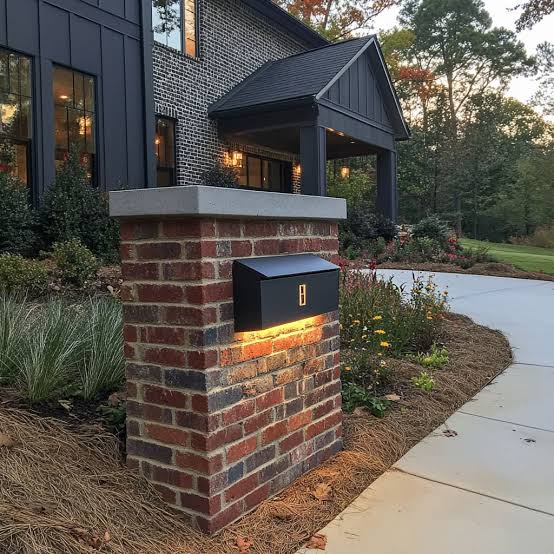
A brick letterbox is far more than a functional receptacle for mail; it serves as a primary architectural anchor for your property’s street presence. Choosing the right design requires balancing visual curb appeal with strict structural parameters to ensure your mailbox withstands harsh weather conditions and meets all national postal requirements.
Core Brick Letterbox Design Trends & Styles
Modern front-of-house masonry trends favor clean horizontal lines, minimalist color palettes, and seamless integration with existing perimeter fences or retaining walls. The choice of structural brickwork should directly complement the home’s core architectural style to establish a cohesive street-front aesthetic.
1. Contemporary & Rendered Brick Letterbox Ideas
Rendered brick pillars are the leading choice for modern architectural homes, delivering a clean, monolithic look that pairs perfectly with minimalist facades. Instead of traditional raw brick surfaces, these structures are finished with specialized coatings to align with current structural trends. Popular colorways center on monochromatic tones like Colorbond Monument, charcoal, and warm off-whites.
For a true architectural statement, modern designs frequently incorporate recessed accent niches or geometric offsets rather than a single uniform pillar block. When executing a rendered design, selecting high-contrast hardware—such as a brushed brass or matte black faceplate—creates a striking visual breakpoint against the smooth, uniform texture of the render.
2. Heritage & Classic Exposed Brick Aesthetics
Classic exposed brick designs rely on texture, character, and traditional craftsmanship to match period homes, such as Federation, Edwardian, or mid-century properties. Rather than covering the masonry, these designs highlight the natural variation of raw earth materials. Builders frequently use recycled sandstocks, classic red dry-pressed bricks, or cream-clay masonry to achieve an authentic look.
The defining characteristic of high-end heritage masonry is the finishing technique. Utilizing flush mortar joints or precise tuck-pointing (where a contrasting line of mortar is neatly applied to emphasize the brickwork grid) elevates the structure from a simple utility column to a piece of crafted masonry. Heritage designs often look best when topped with a custom cast stone or iron custom cap piece to mirror traditional chimney structural details.
3. Integrated Parcel-Friendly & Smart Designs
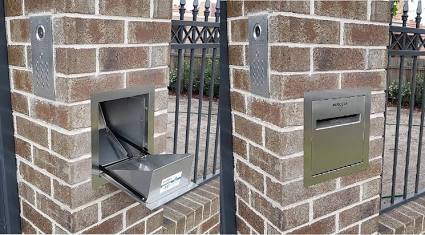
The exponential rise of home package deliveries has made standard slim mail slots practically obsolete for modern households, driving a significant shift toward integrated parcel-drop mailboxes. These high-volume structures feature a large mechanical drop-box mechanism safely cast directly into a wider 2-brick- or 2.5-brick-wide masonry footprint.
When a courier opens the front hatch and drops a parcel inside, an internal counterbalanced floor drops down, safely sliding the package into a locked lower storage cavity where it cannot be accessed from the outside without a key or digital pin combination. This style requires selecting extra-wide telescopic housing sleeves during the initial bricklaying phase to ensure the internal framework fits flawlessly within the structural core.
Architectural Compatibility Matrix
| Architectural Home Style | Recommended Brick/Finish Type | Matching Hardware / Metal Accents | Structural Accent Details |
| Modern Minimalist / Hamptons | Smooth polymer render (Off-white / Alabaster tones) | Marine-grade matte black powder coat | Recessed numbers, clean linear base profiling |
| Traditional / Federation Heritage | Recycled sandstock or dry-pressed red face-brick | Polished brass or antiqued bronze plates | Traditional rowlock capping layers, deep raked joints |
| Industrial / Mid-Century Modern | Charcoal,, cla,,y brick, or dark manganese face-brick | Brushed raw aluminum or structural steel plates | Cantilevered top concrete caps, floating geometric house numbers |
Australia Post Compliance: The Strict Dimensional Cheat Sheet
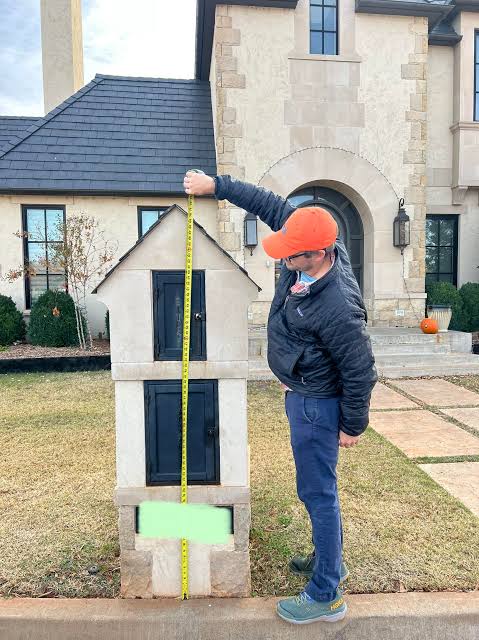
To receive mail from a postal delivery officer, your brick letterbox must precisely comply with the national dimensional regulations set out in Australia Post’s Delivery Policy Guidelines. Failing to build within these legal margins will result in your property being flagged, requiring posties to withhold mail delivery until the structural faults are fully remediated.
1. Verify Slot Sizing & Positioning: Pre-build Checklist.
The horizontal mail aperture (the slot itself) must be at least 230mm wide by 30mm high. If you choose a vertical slot alternative, it must be at least 330mm wide by 30mm high. Ensure a structural internal baffle plate or anti-fishing mechanism is in place to prevent unauthorized access to the mail cavity.
2. Measure the Internal Delivery Cavity: Internal Chamber Specs.
The inner masonry chamber must be completely hollow and unobstructed, with minimum dimensions of 230mm wide x 330mm deep x 160mm high. This precise spatial metric is legally mandated so that an official A4 document envelope can rest completely flat inside without bending, crumpling, or protruding out into the path of rain.
3. Calibrate Height Above Ground Level:
The mail slot aperture must sit between 900mm and 1,200mm above the final surface level of the adjacent pavement or ground. This allows delivery drivers operating motorbikes or pushbikes to safely drop mail into the slot without having to dismount or dangerously overreach.
Note on Apartment / Multi-Unit Nesting: If you are building a consolidated multi-unit nested brick wall for a block of townhouses or units, Australia Post extends the allowed elevation window. The cluster of slots must sit evenly distributed between 600mm and 1,600mm above ground level.
Preventing the “Render Cracking” Disaster on Modern Mailboxes
A common point of structural failure in freestanding rendered brick mailboxes is the rapid development of hairline cracks across the exterior surface within 12 to 24 months of construction. This occurs because raw, unsealed masonry is naturally porous and functions like a sponge, drawing moisture from the surrounding garden soil directly upward into the pillar core. When the sun beats down on the mailbox, this trapped groundwater converts into water vapor, creating internal pressure that ruptures standard sand-and-cement render coats.
To prevent this atmospheric failure, you must mandate the use of modified polymer or flexible acrylic renders rather than old-fashioned sand-and-cement mixes. These modern material formulations contain elastic plasticizers that allow the dried surface to expand and contract dynamically during intense thermal shifts without tearing. Furthermore, the exterior brick surfaces must be entirely dry and free of efflorescence (powdery salt deposits) before applying any base coat.
The most critical insurance policy against long-term structural shifting, however, lies directly beneath the ground. A brick letterbox can easily weigh between 300kg and 600kg, depending on its footprint size. If you skimp on the foundation slab, the structural pillar will inevitably sink, tilt, or shear away from your main perimeter wall line.
[Soil Layer] -> [100mm Compacted Road Base] -> [200mm Reinforced Concrete Footing] -> [Damp-Proof Barrier Film] -> [First Brick Course]
To build a permanent base, excavate a footing trench to a minimum depth of 200mm into stable subsoil, pack a 100mm base layer of compacted road base, and pour a dedicated concrete footing reinforced with steel mesh. Allow a full 24 to 48 hours of uninterrupted curing time for the structural slab before setting your first brick layout course. Finally, lay a durable, damp-proof plastic barrier film directly on top of the first structural brick course to permanently break the groundwater capillary path.
Hardware Specifications: What Actually Lasts Outdoors
An outdoor environment will cause substandard hardware metals to degrade aggressively. Selecting the wrong grade of internal lining or front plating will result in unsightly rust streaks staining your beautiful new brickwork or render.
316 Marine-Grade vs. 304 Grade Stainless Steel
When sourcing faceplates, number plates, and rear lockable doors, 316 Marine-Grade Stainless Steel is the non-negotiable benchmark, particularly if your property sits anywhere within 20 kilometers of a coastal wind zone. While standard 304-grade stainless steel looks identical on a showroom shelf, it possesses less chromium. It lacks molybdenum, leaving it highly susceptible to “tea-staining”—a form of unsightly surface pitting corrosion caused by atmospheric salt exposure.
Investing in 316-grade components ensures the metal surface retains its clean reflectivity and resists oxidation indefinitely. If you prefer a matte dark finish, ensure the manufacturer has used a high-temperature powder-coating process over an electro-galvanized iron core to prevent the paint layer from peeling when exposed to UV radiation.
Telescopic Mailbox Sleeves
Laying bricks directly against a raw plastic or static metal box can result in uneven internal joints and water leakage gaps. To avoid this, always use an extendable telescopic internal mailbox sleeve (such as specialized models from structural brands like Sandleford or Velox). These smart metal boxes consist of two interlinked metal sections that smoothly slide inward or outward, allowing you to instantly customize the depth of the box—typically ranging from 203mm to 500mm.
This ensures that, whether you are building a slim 1-brick-wide pier (230mm deep) or a massive 2-brick-wide structural pillar (460mm deep), the sleeve can adjust to a flush alignment with both the front brick facade and the rear collection wall face without requiring dangerous cutting or grinding.
Realistic Financial Breakdowns: Materials & Masonry Labor Costs
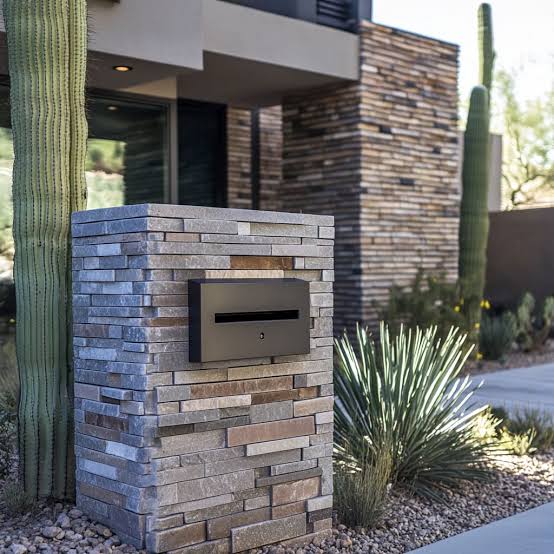
The total cost to construct a custom brick letterbox depends primarily on whether you choose to purchase DIY-friendly component kits or hire a licensed stonemason or bricklayer.
Cost Analysis Matrix (2026 Estimates)
| Build Configuration | Estimated Material Costs | Professional Trade Labor Rates | Total Project Price Window |
| Basic Raw Face-Brick Pillar (1.5 Brick Wide, Standard Box) | $150 – $300 (Standard clay bricks, basic sleeve, mortar) | $450 – $700 (Half-day trade site fee) | $600 – $1,000 |
| Modern Polymer Rendered Pillar (A4 Lockable Slot, Accent Niche) | $250 – $450 (Concrete blocks, polymer mix, premium plate) | $800 – $1,200 (Requires multiple curing site visits) | $1,050 – $1,650 |
| Premium High-Capacity Parcel Box (2.5 Brick Footprint, Reclaimed Sandstock) | $600 – $1,100 (Mechanical parcel safe, specialized bricks) | $1,200 – $1,800 (Full footings & precision cutting) | $1,800 – $2,900 |
Frequently Asked Questions
Do I need council approval to build a brick letterbox?
In the vast majority of local Australian government council jurisdictions, you do not need formal development approval (DA) to build a standard residential brick letterbox, provided it sits under 1.2 meters in height. It resides completely within your legal property boundary lines. However, if you plan to integrate the mailbox into a retaining wall over 1 meter high or connect it directly to an electrified front sliding gate track, you must cross-check your local planning scheme overlays, as structural height exemptions vary.
Can you paint directly onto an unrendered brick letterbox?
You can paint directly onto raw bricks, but skipping a dedicated masonry primer coat is a guaranteed way to cause premature peeling. Bricks are highly alkaline and draw salts out of the mortar beds; this chemical movement will easily degrade standard exterior acrylic topcoats. To avoid this, wash down the brickwork thoroughly to remove dust, apply an alkali-resistant exterior masonry sealer/primer block, and then apply two coats of premium low-sheen outdoor paint.
How many bricks do I need for a standard 1.5-brick-wide letterbox pillar?
For a standard structural pillar measuring 1.5 bricks wide (approximately 350mm x 350mm), standing roughly 1 meter tall, you will need approximately 44 to 50 standard metric bricks, assuming a standard 10mm mortar joint profile. It is always best practice to purchase an extra 10% volume buffer to account for any structural damage, half-cuts around the internal hardware sleeve housing, or material inconsistencies on delivery.