

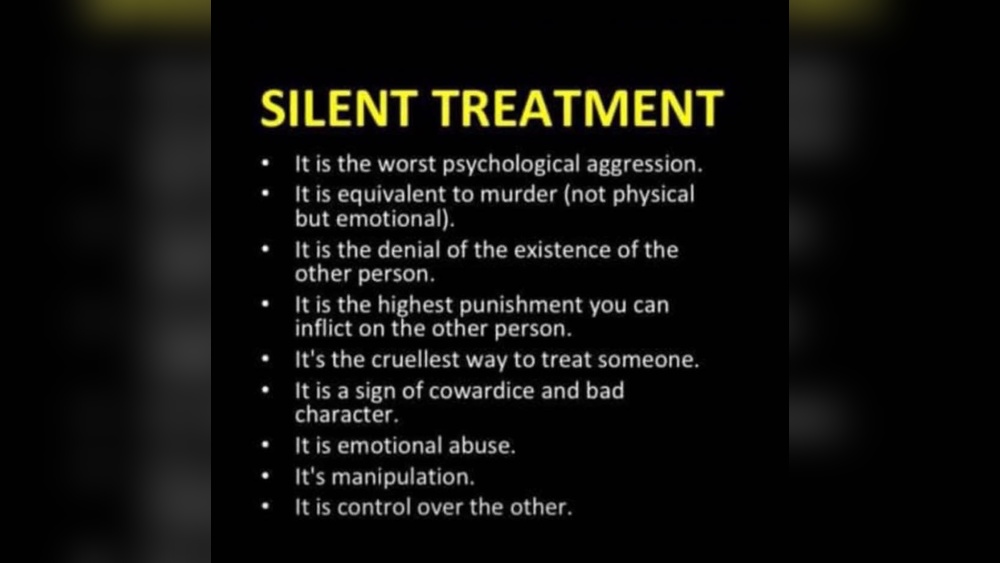
When someone gives you the silent treatment, it can feel confusing and even painful. This act of refusing to talk, reply, or acknowledge another person is more than just a moment of quiet. The silent treatment is a form of communication that reveals a lot about the person using it. While many see it as a way to avoid conflict, it often sends a louder message about their character and emotional maturity.
What Is The Silent Treatment?
The silent treatment happens when one person completely ignores another. This may include not answering messages, refusing to speak, or acting as if the other person does not exist. Psychologists often call it a type of emotional manipulation. It is common in families, friendships, and workplaces.
The effects can be deep. A 2014 study from Purdue University found that people who experienced the silent treatment felt more rejected and less in control. The person giving the silent treatment often wants to punish, control, or avoid responsibility.
Why People Use The Silent Treatment
Not everyone uses the silent treatment for the same reasons. Some common motivations include:
- Avoiding conflict: They may fear confrontation and use silence to escape a difficult conversation.
- Punishment: The person may want to make someone feel guilty or sorry.
- Control: Silence can be used to gain power or make the other person feel helpless.
- Insecurity: People who struggle to express emotions sometimes withdraw instead of talking.
But no matter the reason, this action reveals more about the giver than the receiver.

Credit: iluminadaec.wordpress.com
What The Silent Treatment Says About You
When someone uses the silent treatment, it often speaks volumes about their emotional skills and character traits. Here’s what it can reveal:
Lack Of Emotional Intelligence
Emotional intelligence means being able to understand and manage your feelings and those of others. Using silence to solve problems often shows poor emotional awareness. Instead of talking about issues, the silent person hides from them.
Poor Communication Skills
Healthy relationships depend on open communication. Silent treatment shows that the person may not know how to express their feelings or listen to others. This often leads to misunderstandings and bigger problems.
Tendency Toward Manipulation
In some cases, silent treatment is a way to control others. It can be a kind of emotional blackmail, making the other person feel anxious or desperate for attention. This is a red flag for toxic behavior.
Fear Of Vulnerability
Speaking openly about feelings takes courage. Silence can be a shield for people who do not want to admit they are hurt, angry, or scared. But hiding behind silence stops real connection and healing.
Table: Silent Treatment Vs. Healthy Communication
Below is a comparison of how silent treatment differs from healthy communication:
| Silent Treatment | Healthy Communication |
|---|---|
| Ignores or avoids | Shares feelings honestly |
| Creates distance | Builds understanding |
| Increases anxiety | Reduces tension |
| Blocks resolution | Finds solutions |
The Impact On Relationships
The silent treatment is not a harmless act. It can have long-term effects on both sides of the relationship.
Emotional Harm
Being ignored can make someone feel worthless and rejected. Over time, this can lower self-esteem and cause anxiety or depression.
Trust Issues
When someone uses silence as a weapon, it damages trust. The other person may start to question their own worth and even the stability of the relationship.
Power Imbalance
Silent treatment often creates an unhealthy balance of power. One person controls the mood and direction of the relationship, while the other feels lost and desperate for connection.
Table: Emotional Effects Of Silent Treatment
This table shows some common emotional effects for the receiver:
| Short-term Effects | Long-term Effects |
|---|---|
| Confusion | Low self-esteem |
| Anxiety | Trust issues |
| Frustration | Emotional withdrawal |
| Sadness | Depression |
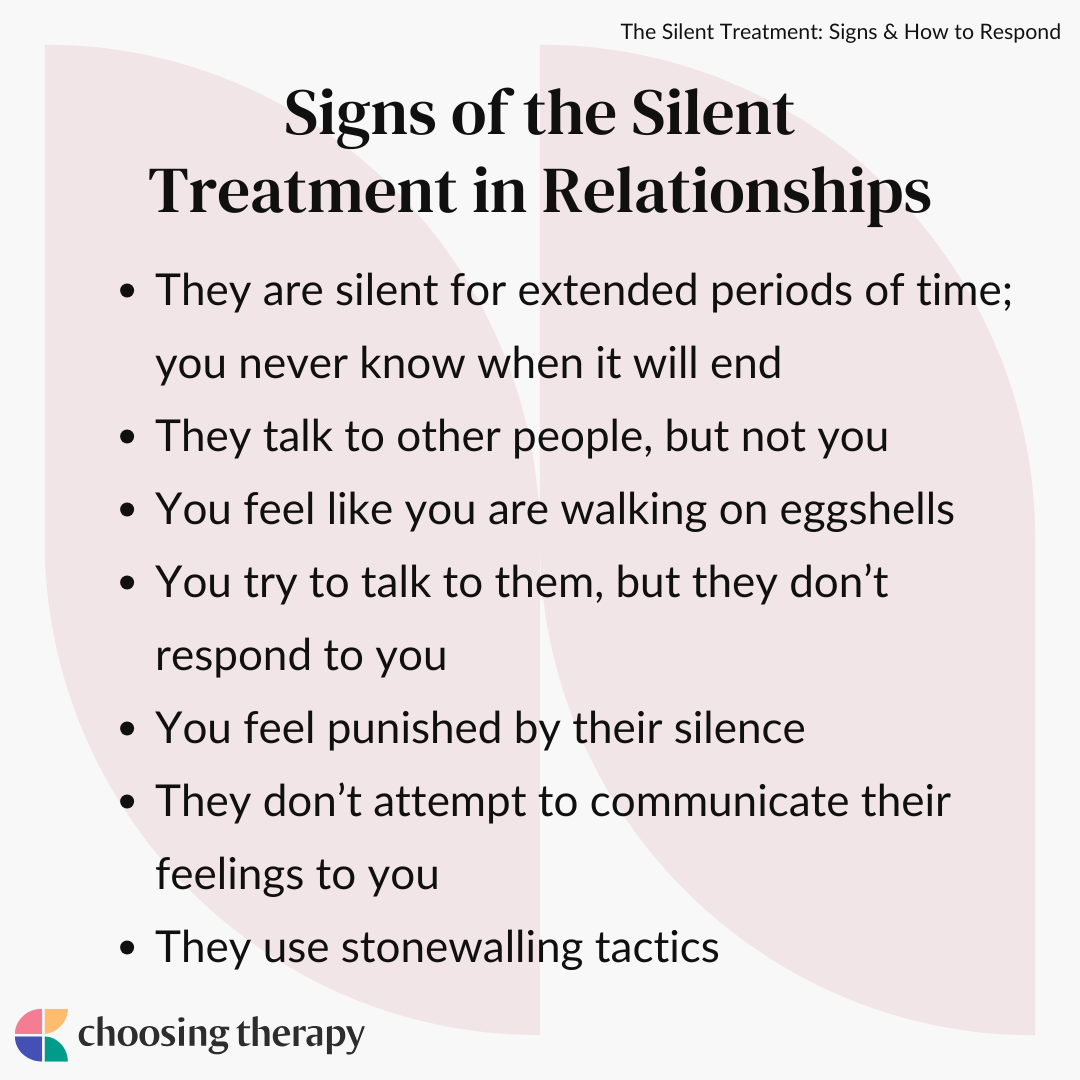
Credit: www.choosingtherapy.com
Healthier Alternatives To The Silent Treatment
If you feel the urge to use the silent treatment, it is important to find better ways to manage conflict and emotions. Here are some options:
- Take a pause, not a freeze: It’s okay to say, “I need a moment to cool down,” but promise to return and talk later.
- Use “I” statements: Express your feelings without blaming, like “I feel hurt when…”
- Seek understanding: Listen to the other person’s side before responding.
- Ask for help: If communication is hard, consider counseling or mediation.
Many people think silence helps things “blow over,” but it usually makes problems worse. True growth comes from facing issues, not hiding from them.
Non-obvious Insights For Better Relationships
Most people overlook two important points:
- Silent treatment can become a habit without people realizing it. If you find yourself doing it often, it’s a sign to reflect on your conflict style.
- Not all silence is equal. Sometimes, stepping back for a short time to process emotions is helpful—if you communicate your need for space clearly.
If you want to learn more about healthy relationship boundaries, the Psychology Today Relationships Guide offers expert insights.
Choosing open, honest communication over the silent treatment takes courage. It is a sign of emotional strength, not weakness. The next time you feel tempted to go silent, remember: your actions shape how others see your character.

Credit: www.someecards.com
Frequently Asked Questions
What Is The Silent Treatment?
The silent treatment is when someone ignores or refuses to speak to another person as a way to express anger, punish, or control. It is often used instead of open communication.
Is The Silent Treatment A Form Of Abuse?
In some cases, yes. When used to control, punish, or manipulate, it can be a type of emotional abuse.
Why Does The Silent Treatment Hurt So Much?
It triggers feelings of rejection and worthlessness. Being ignored by someone you care about can feel like being erased from their life.
How Should I Respond If Someone Gives Me The Silent Treatment?
Stay calm. Let them know you are open to talking when they are ready. Protect your own self-esteem and set boundaries if needed.
Can Relationships Recover From The Silent Treatment?
Yes, if both people are willing to communicate and rebuild trust. Seeking help from a therapist can also be very helpful.