
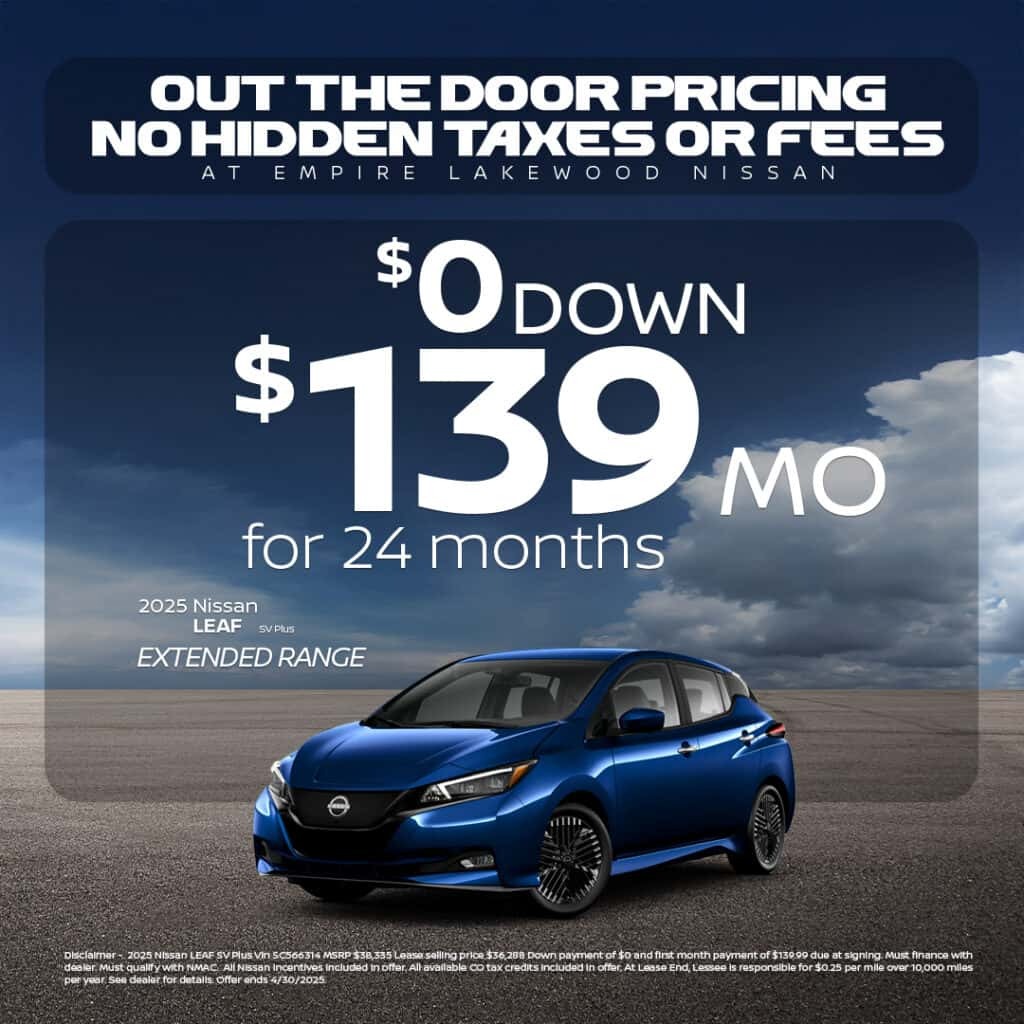
Looking for a new car but want to avoid a big upfront payment? You’re not alone. Many people today search for the best lease deals $0 down to drive a new vehicle without a large cash outlay. These offers can help you save money and get behind the wheel of a reliable, stylish car. But finding the right deal takes a bit of know-how and careful research. Let’s explore what $0 down lease deals really mean, where to find them, and how to pick the best one for your needs.
Understanding $0 Down Lease Deals
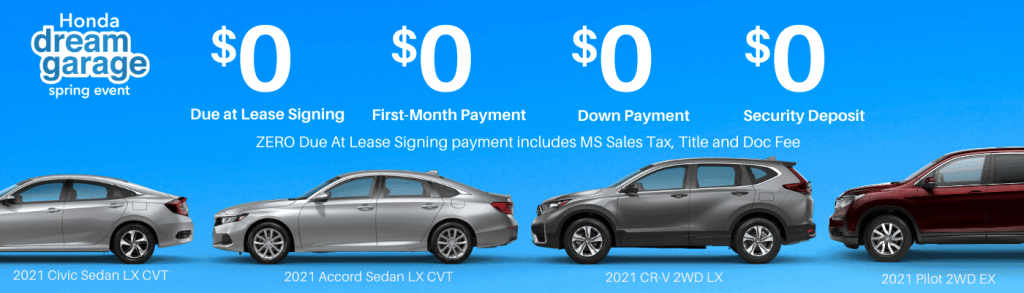
A $0 down lease means you can start your lease without paying money upfront at signing. Usually, leases require a down payment (often called “due at signing”) that covers the first month’s payment, fees, and a security deposit. With $0 down, these costs are rolled into your monthly payments instead.
Here’s a quick comparison of a standard lease vs. $0 down lease:
| Lease Type | Upfront Payment | Monthly Payment |
| Standard Lease | $2,000 – $4,000 | Lower |
| $0 Down Lease | $0 (excluding taxes/fees) | Higher |
Most $0 down deals still require you to pay for taxes, registration, and fees at signing. True sign-and-drive offers are rare, so always read the fine print.
Top Brands Offering $0 Down Lease Deals
Many carmakers run $0 down promotions, especially at the end of model years or during special events. Here are some brands often known for strong $0 down lease offers:
- Hyundai – Known for affordable leases on models like the Elantra and Tucson.
- Toyota – Regular $0 down deals on the Corolla, Camry, and RAV4.
- Honda – CR-V and Civic often available with low or zero upfront.
- Chevrolet – Equinox and Malibu are popular in lease specials.
- Nissan – Altima and Rogue feature in many $0 down campaigns.
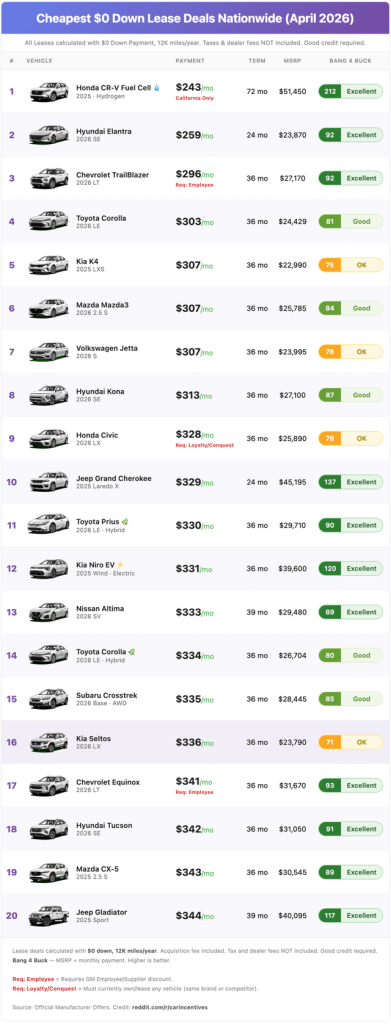
Here’s a sample of current offers you might find:
| Model | Monthly Payment | Term (Months) | Mileage/Year |
| Hyundai Elantra SE | $239 | 36 | 10,000 |
| Toyota RAV4 LE | $289 | 36 | 12,000 |
| Chevrolet Equinox LS | $259 | 36 | 10,000 |
Remember, these offers can change monthly and may not be available in all regions.
How To Qualify For The Best $0 Down Leases
Getting approved for a $0 down lease isn’t automatic. Dealers and finance companies look for:
- Good credit score (usually above 680)
- Stable income and employment
- Low debt-to-income ratio
If your credit isn’t perfect, you might still qualify, but expect higher monthly payments or extra fees.
What Else Impacts Your Lease Payment?
Several factors affect the final cost of your lease:
- Money factor: This is the lease’s interest rate. Lower is better.
- Residual value: The car’s estimated value at lease end. Higher value means lower payments.
- Mileage limit: Most leases cap annual miles at 10,000–12,000. Go over, and you’ll pay extra fees.
- Taxes and fees: These aren’t always included in “$0 down” advertising.
Are $0 Down Lease Deals Really A Good Value?
A zero-down lease can be a smart move if you want to keep more cash in your pocket now. However, it’s important to understand the trade-offs.
Pros
- No large upfront payment
- Easier to manage cash flow
- Drive a new car more often
Cons
- Higher monthly payments
- Total cost might be more than a standard lease
- Not all applicants qualify
One insight many people miss: If you get into an accident soon after starting a $0 down lease, you could owe more than the insurance pays out, since you haven’t built up equity. Consider gap insurance to protect yourself.
Where To Find The Best Lease Deals $0 Down
You can find deals in several places:
- Official automaker websites: Brands like Toyota, Hyundai, and Honda post current offers.
- Local dealership sites: Sometimes run special regional offers.
- Car shopping sites: Autotrader, Edmunds, and Cars.com list national and local deals.
- Holiday sales events: Memorial Day, Labor Day, and year-end clearances often feature $0 down offers.
Don’t just look at the headline. Call or visit the dealer to confirm the real terms and make sure there are no hidden fees.
Common Mistakes To Avoid
Many shoppers jump at the first $0 down ad they see, but there are a few pitfalls:
- Ignoring total lease cost – Calculate the total amount you’ll pay over the lease, not just the monthly payment.
- Missing hidden fees – Some deals hide costs in acquisition or disposition fees. Ask for a full breakdown.
- Overestimating mileage – If you drive more than the included miles, excess mileage fees can add up fast.
- Skipping lease-end planning – Know what happens at lease end. Will you buy the car, or are there return fees?
Always get everything in writing before you sign.
Tips For Getting The Best $0 Down Lease
- Shop multiple dealers: Get quotes from at least three dealers for the same model.
- Negotiate the selling price: The lower the sale price, the better your lease terms.
- Ask about incentives: Sometimes there are extra discounts for loyalty, military, or students.
- Factor in insurance: Leasing often requires higher coverage; get a quote before committing.
Don’t be afraid to walk away if the deal doesn’t meet your needs.
Frequently Asked Questions
What Does $0 Down Really Mean In A Car Lease?
$0 down means you do not pay an upfront down payment. However, you may still be responsible for taxes, registration, and the first month’s payment unless it’s a true sign-and-drive deal.
Can I Lease With $0 Down If I Have Bad Credit?
It’s possible, but much harder. With lower credit, you may face higher interest rates, bigger monthly payments, or be required to put some money down.
Are All Fees Included In $0 Down Lease Deals?
No, most $0 down deals exclude taxes, registration, and other fees. Always ask the dealer for a full cost breakdown before signing.
Is Gap Insurance Necessary With A $0 Down Lease?
Yes, gap insurance is highly recommended. It covers the difference if your car is totaled early in the lease and you owe more than the car’s value.
Where Can I Find Current $0 Down Lease Offers?
Check automaker websites, trusted car sites like Edmunds, and local dealership specials. Offers change frequently, so shop around.
A $0 down lease can be a smart way to drive a new car with less upfront cost. Take time to research, ask questions, and never rush into a deal. With the right approach, you can enjoy the road ahead—and keep your budget on track.