
When you walk into a workshop, you’ll often see two main types of power tools: air tools and electric tools. Both can drill, cut, grind, or fasten. But they work in different ways, and each has its own strengths and weaknesses. If you’re starting a new project or upgrading your toolbox, understanding the differences is crucial. The right choice can save you time, money, and frustration.
Let’s explore how air and electric tools work, their pros and cons, and which situations suit each best. You’ll also see real-world examples, get tips for choosing between them, and clear up some common myths. By the end, you’ll be ready to pick the best tool for your needs—whether you’re a hobbyist or a professional.
How Air Tools And Electric Tools Work
Air tools, also called pneumatic tools, use compressed air as their power source. You need an air compressor to run them. When you squeeze the trigger, air flows from the compressor through a hose into the tool, making it move or spin. Popular examples include impact wrenches, air ratchets, and paint sprayers.
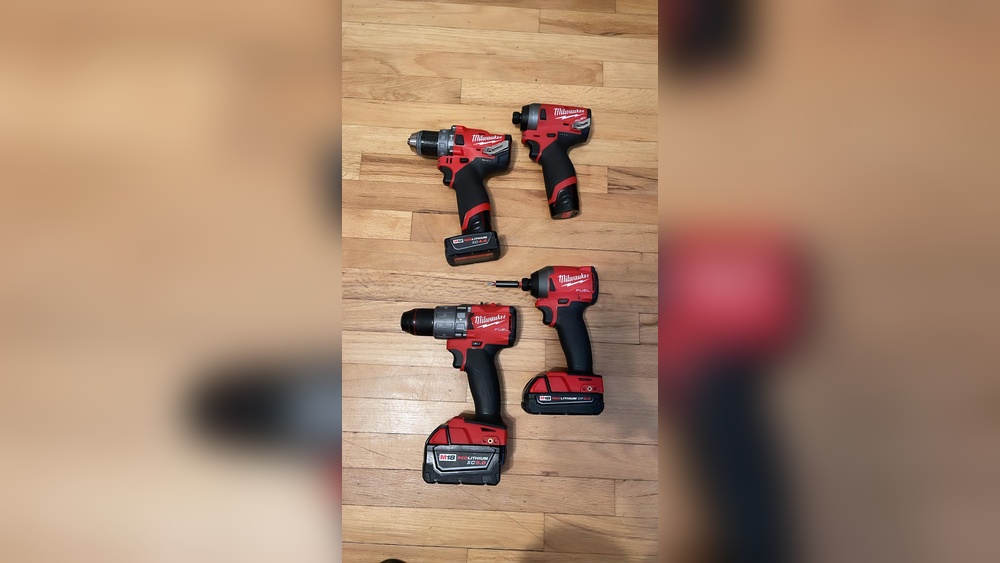
Electric tools, on the other hand, use electricity. They can be corded (plugged into the wall) or cordless (using rechargeable batteries). Common electric tools include drills, saws, and grinders. Cordless models have become very popular thanks to advances in battery technology.
Also more: Pneumatic Vs Electric Tools
Quick Comparison: Power Source And Setup
| Air Tools | Electric Tools | |
|---|---|---|
| Power Source | Compressed air (from compressor) | Electricity (corded or battery) |
| Portability | Limited by air hose and compressor | High (especially cordless models) |
| Initial Setup | Need compressor, hose, fittings | Plug in or insert battery |
Pros And Cons Of Air Tools
Air tools have been a favorite in auto shops and industrial settings for decades. Here’s why many professionals still rely on them:
Advantages
- Power-to-Weight Ratio: Air tools are often lighter than electric tools with similar power. This reduces fatigue during long tasks.
- Durability: With fewer moving parts, air tools can last longer, especially in tough environments.
- Continuous Use: They don’t overheat as easily as electric motors, so they’re great for long jobs.
- Consistent Power: As long as the compressor keeps up, they deliver steady performance.
Disadvantages
- Compressor Required: You need to buy and maintain a compressor, which can be large and noisy.
- Mobility Limits: Hoses restrict movement, and compressors aren’t always easy to move around.
- Maintenance: Air tools need regular oiling and care to prevent rust and wear.
- Noise: Both the tool and compressor can be loud, sometimes requiring hearing protection.
Example: Auto Repair Shops
Many mechanics prefer air impact wrenches for removing lug nuts. These tools deliver high torque and run all day, but the shop needs a powerful compressor system. For shops with multiple workers, air tools can be used simultaneously by connecting several hoses to one compressor.
Pros And Cons Of Electric Tools
Electric tools are now common in construction, woodworking, and at-home DIY projects. Their popularity has grown, especially as batteries have improved.
Advantages
- Portability: Cordless electric tools can go anywhere. No need for hoses or compressors.
- Easy Setup: Plug them in or charge the battery—no extra equipment needed.
- Low Maintenance: Electric tools generally need less regular care than air tools.
- Quieter Operation: No compressor noise, and some models are very quiet.
Disadvantages
- Weight: Batteries add weight to cordless models, which can be tiring over time.
- Heat Buildup: Electric motors can overheat if used continuously for long periods.
- Battery Limits: Cordless tools only run as long as the battery lasts. Power can drop as batteries drain.
- Higher Upfront Cost: High-quality cordless tools and batteries can be expensive.
Example: Home Renovation
A homeowner fixing drywall might use a cordless drill to install screws. The drill is easy to carry from room to room, and there’s no need to set up a compressor. But if the battery runs out, work stops until it’s recharged.
Key Factors To Consider When Choosing
Choosing between air and electric tools isn’t just about preference. Here are important things to keep in mind:
1. Type Of Work
- High-torque, repetitive jobs (like auto repair) often suit air tools better.
- Portability and occasional use (like home DIY projects) usually favor electric tools.
2. Work Environment
- Fixed workshop: Air tools make sense if you already have a good compressor.
- Job sites or outdoor work: Cordless electric tools shine where outlets and compressors aren’t available.
3. Budget
- Initial cost: Air tools are often cheaper per tool, but the compressor adds to the total.
- Long-term cost: Electric tools might cost more upfront, but you don’t need to buy or maintain a compressor.
4. Maintenance
- Air tools: Need oiling, cleaning, and compressor upkeep.
- Electric tools: Less frequent maintenance, but batteries may need replacing after a few years.
5. Power And Performance
- Air tools: Consistent power as long as the compressor can keep up.
- Electric tools: Corded models offer steady power, but cordless performance depends on battery life and quality.
Key Insight: Air Quality And Moisture
A common beginner mistake is ignoring the role of air quality in pneumatic tools. Compressors can collect moisture, which can get into your tools and cause rust or damage. Using an air filter or dryer extends tool life—a detail many new users overlook.
Credit: www.youtube.com
Real-world Comparison: Common Tool Types
Let’s compare some popular air and electric tools side by side.
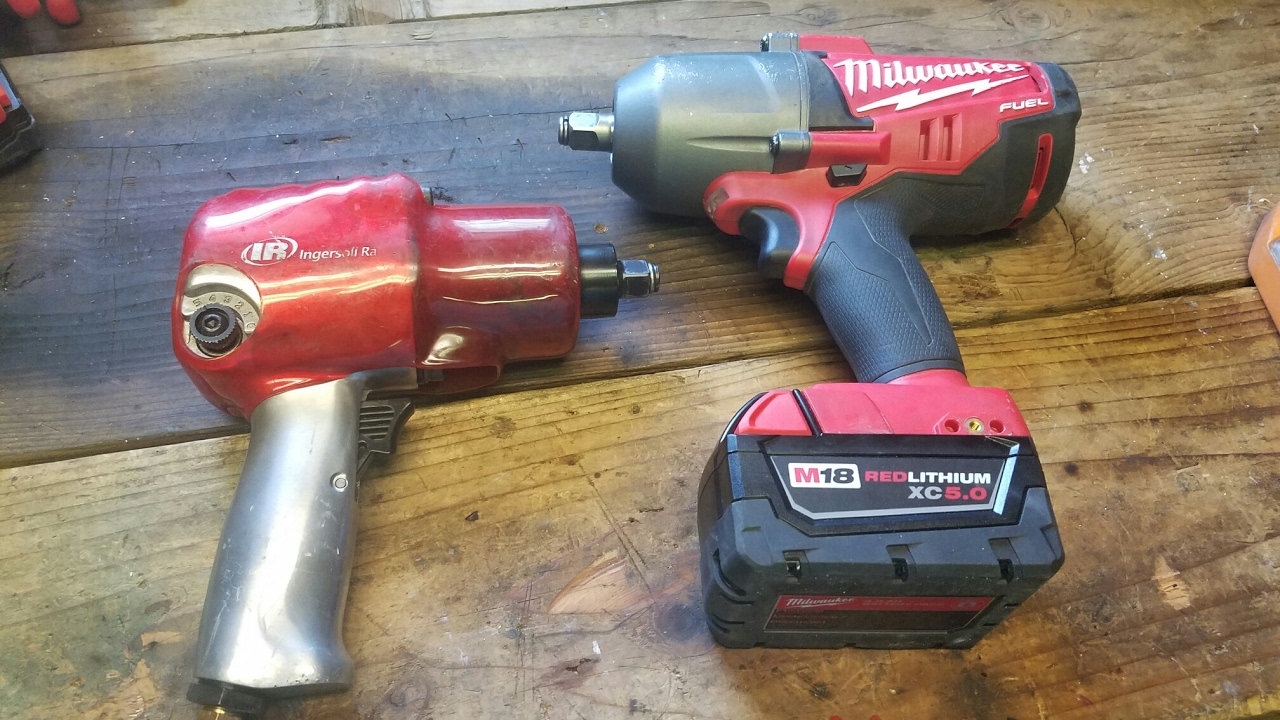
Impact Wrenches
| Air Impact Wrench | Electric Impact Wrench | |
|---|---|---|
| Torque Output | High (up to 1,200 ft-lbs or more) | Moderate to High (500–1,000 ft-lbs in top models) |
| Weight | Lighter (no battery) | Heavier (due to battery) |
| Best Use | Auto shops, industrial | Field work, home garages |
Sanders
| Air Sander | Electric Sander | |
|---|---|---|
| Continuous Operation | Excellent (no overheating) | Can overheat with long use |
| Precision | Very high (smooth control) | Good, but can vibrate more |
| Portability | Low (needs compressor) | High (especially cordless) |
Paint Sprayers
- Air paint sprayers offer fine control and are common in auto body shops.
- Electric paint sprayers are better for quick setup and smaller jobs, like painting furniture.
Common Mistakes Beginners Make
When starting out, many people:
- Underestimate the cost and size of compressors needed for air tools. Small compressors can’t run big tools for long.
- Forget about battery compatibility for electric tools. Not all brands use the same batteries, so you may need several chargers.
- Ignore maintenance needs. Air tools need regular oiling. Electric tools need clean vents and occasional battery care.
- Overlook noise levels. Air tools and compressors can be much louder than expected.
Safety Considerations
Both air and electric tools need careful handling, but their risks differ:
- Air tools: Hoses can whip if disconnected under pressure, and flying debris is common. Always wear eye and ear protection.
- Electric tools: Corded models risk electric shock if cords are damaged. Cordless tools can catch fire if batteries are punctured or overheated.
A lesser-known risk: Static electricity can build up in air hoses, especially with some paints and solvents. Use grounded hoses for safety.
Environmental Impact
- Air compressors use a lot of electricity, especially large shop models.
- Cordless electric tools require battery production and disposal, which has an environmental cost.
- Consider using tools with energy-efficient motors or compressors with auto-shutoff features to reduce your impact.

Credit: www.reddit.com
Which Is Right For You? Key Scenarios
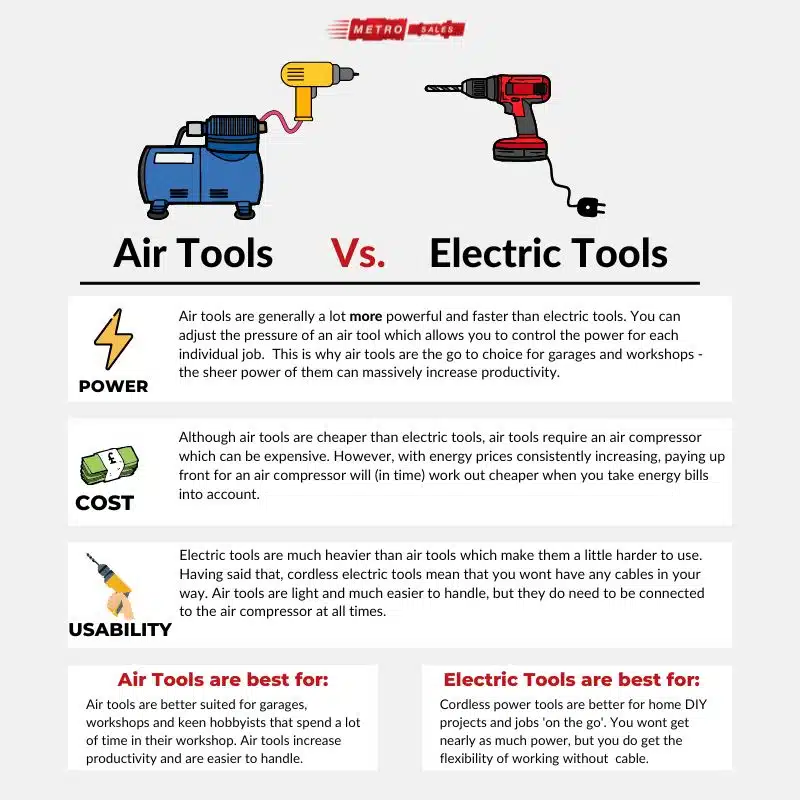
Choose air tools if:
- You do heavy, repetitive work in a fixed location.
- You already own a good compressor.
- You need maximum power for jobs like removing rusted bolts.
Choose electric tools if:
- You move between job sites.
- You want fast setup and easy storage.
- You do short, varied tasks and value portability.
A pro tip: Many professionals use both. For example, a car mechanic may use air tools for tough bolts but keep a cordless electric drill for quick jobs.
Recent Advances In Tool Technology
In the last decade, lithium-ion batteries have made cordless electric tools much stronger and lighter. Some cordless impact wrenches now rival air tools in power. Smart features like digital controls and Bluetooth battery monitoring are also appearing in electric models.
Air tools are also evolving. New composite materials make them lighter, and oil-free designs reduce maintenance. Some compressors now run quieter and use less energy.
Credit: www.metrosales.co.uk
Non-obvious Insights
- Air tool performance depends on hose diameter. A narrow hose can limit power, even with a strong compressor. Always match hose size to tool needs.
- Battery storage matters for electric tools. Storing batteries fully charged (or empty) can reduce their life. Aim for 40–60% charge when storing long-term.
Where To Learn More
For in-depth technical details and tool reviews, visit the Wikipedia page on pneumatic tools.
Frequently Asked Questions
What’s The Main Difference Between Air Tools And Electric Tools?
The main difference is their power source. Air tools use compressed air from a compressor, while electric tools use electricity—either from a wall outlet (corded) or a battery (cordless).
Are Air Tools Always More Powerful Than Electric Tools?
Not always. Air tools often deliver higher instant torque, but top electric tools are catching up, especially with modern batteries. For most home uses, electric tools provide enough power.
Which Type Lasts Longer: Air Or Electric Tools?
Air tools can last longer with good maintenance since they have fewer moving parts. However, electric tools need less day-to-day care and modern models are very reliable.
Are Air Tools Cheaper Than Electric Tools?
Individual air tools are usually less expensive, but you need to factor in the cost of a compressor and accessories. For small shops or DIY, electric tools may be more cost-effective.
Can I Use Both Air And Electric Tools In My Shop?
Yes. Many professionals mix and match. Air tools handle tough, repetitive jobs, while electric tools are great for quick, mobile tasks. Just plan your workspace for both compressors and chargers.
Choosing between air tools and electric tools comes down to your needs, space, and budget. Both have their place in a well-equipped workshop. With the right knowledge, you’ll get more done—and enjoy your work a lot more.