
Snorkeling In Maui: A Guide To The Island’s Best Spots
Maui is famous for its stunning beaches, clear blue water, and vibrant sea life. If you love exploring nature or simply want to see tropical fish up close, snorkeling in Maui is a must-do activity. The island offers a mix of calm bays, colorful reefs, and even spots where you can swim with sea turtles. Whether you are a beginner or an experienced snorkeler, Maui has places that fit all skill levels. This guide will help you find the best places to snorkel, understand what makes each spot unique, and learn practical tips for a safe and memorable adventure.
Why Maui Is A Top Snorkeling Destination
Maui stands out because of its warm water, rich marine diversity, and easy access to snorkeling sites. The island has over 30 miles of beaches, many of which have reefs just steps from the sand. You can see over 250 species of fish, including the colorful parrotfish and the Hawaiian state fish, the humuhumunukunukuapua’a. Maui’s waters are also home to green sea turtles (honu), eagle rays, and sometimes even monk seals.
The weather is pleasant year-round. Water temperatures range from 75°F to 80°F, and visibility often exceeds 50 feet, especially during summer. Maui’s west and south shores usually have calmer seas, making them ideal for snorkeling. Some areas are protected by natural lava rock, which creates safe swimming zones.
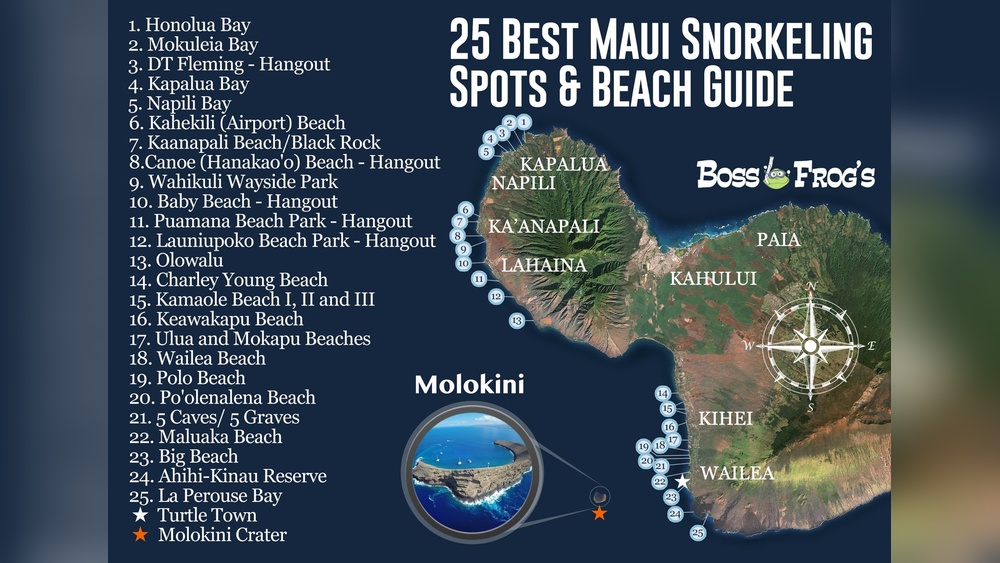
Best Places To Snorkel In Maui
Let’s explore the top snorkeling spots, what makes them special, and what you should know before you go.
1. Molokini Crater
Molokini is a crescent-shaped volcanic crater located about 3 miles off Maui’s southwest coast. It is a marine preserve, which means fishing and collecting are not allowed. This protection keeps the reef healthy and attracts many sea creatures.
- Visibility: Up to 150 feet
- Species: Over 250 types of fish, including moray eels, angelfish, and butterflyfish
- Access: Only by boat tours
Molokini’s deep clear water and vibrant coral gardens make it a favorite for both beginners and advanced snorkelers. You can often see schools of fish and even small reef sharks. The crater blocks waves, so conditions are usually calm.
2. Ahihi Kinau Natural Area Reserve
Located in South Maui, this protected reserve is known for its rich biodiversity. The lava rock coastline creates unique underwater landscapes and shelter for marine life.
- Visibility: 50–100 feet
- Species: Parrotfish, wrasse, sea turtles
- Access: Short walk from parking lot
Ahihi Kinau is less crowded than other spots. The reserve’s rules forbid fishing and touching coral, which helps keep the ecosystem healthy. Beginners should stay in shallow areas, as deeper sections have stronger currents.
3. Makena Landing
Makena Landing is a small bay south of Wailea. It is famous for its “Five Caves” or “Five Graves”—underwater tunnels and arches formed by lava. The bay is calm in the morning and attracts sea turtles.
- Visibility: 40–80 feet
- Species: Turtles, goatfish, octopus
- Access: Easy beach entry
Makena Landing is ideal for snorkelers who want to see turtles. The area near the rocky point is best for sea life, but avoid the deeper caves unless you are experienced.
4. Honolua Bay
Honolua Bay sits on Maui’s northwest coast. It is part of a marine conservation district and is well-known for its coral reefs.
- Visibility: 60–120 feet
- Species: Reef fish, turtles, eagle rays
- Access: Short hike from parking
The bay’s rocky shoreline and healthy reef offer excellent snorkeling. The best conditions are in summer, when water is calm. Stay close to shore, as boats sometimes enter the deeper part of the bay.
5. Kapalua Bay
Kapalua Bay is a sheltered cove with gentle waves and soft sand. It’s one of Maui’s most family-friendly snorkeling spots.
- Visibility: 40–80 feet
- Species: Butterflyfish, wrasse, turtles
- Access: Direct beach entry
The bay’s coral reefs start near the rocky edges. Early morning is best for clear water. Kapalua Bay is often ranked among the world’s top beaches.
6. Black Rock (pu’u Keka’a) At Ka’anapali Beach
Black Rock is a lava promontory at the north end of Ka’anapali Beach. The area is famous for its daily cliff diving ceremony and abundant marine life.
- Visibility: 40–70 feet
- Species: Turtles, surgeonfish, trumpetfish
- Access: Beach entry
Snorkeling is best near the base of Black Rock, where fish and turtles feed. Watch for strong currents, especially in the afternoon.
7. La Perouse Bay
La Perouse Bay is located at the end of Makena Road and is surrounded by ancient lava fields.
- Visibility: 40–70 feet
- Species: Goatfish, triggerfish, turtles
- Access: Rocky entry, not ideal for beginners
The underwater terrain is dramatic, but entry can be tricky due to rocks. Experienced snorkelers enjoy the variety of fish and sometimes spot dolphins.
8. Ulua Beach
Ulua Beach sits between Wailea and Kihei. It’s popular with both locals and tourists, and the reef starts close to the shore.
- Visibility: 30–70 feet
- Species: Moorish idol, tang, turtles
- Access: Sandy entry
Ulua Beach is great for families and beginners. Go early to avoid crowds and get the clearest water.
9. Turtle Town (maluaka Beach)
Turtle Town is the nickname for the area near Maluaka Beach in South Maui. It’s famous for its population of green sea turtles.
- Visibility: 40–80 feet
- Species: Turtles, butterflyfish, coral
- Access: Beach entry
Snorkelers often see turtles feeding or resting. The best spot is on the right side of the beach, near the rocky outcroppings.
10. Ho’okipa Beach Park
Ho’okipa Beach is better known for windsurfing but also offers good snorkeling in calm conditions.
- Visibility: 30–60 feet
- Species: Turtles, wrasse, needlefish
- Access: Beach entry
Snorkeling here is best early in the morning. You can often see turtles resting on the shore. Avoid the water if waves are strong.
Credit: thehawaiivacationguide.com
Comparing Maui’s Top Snorkel Spots
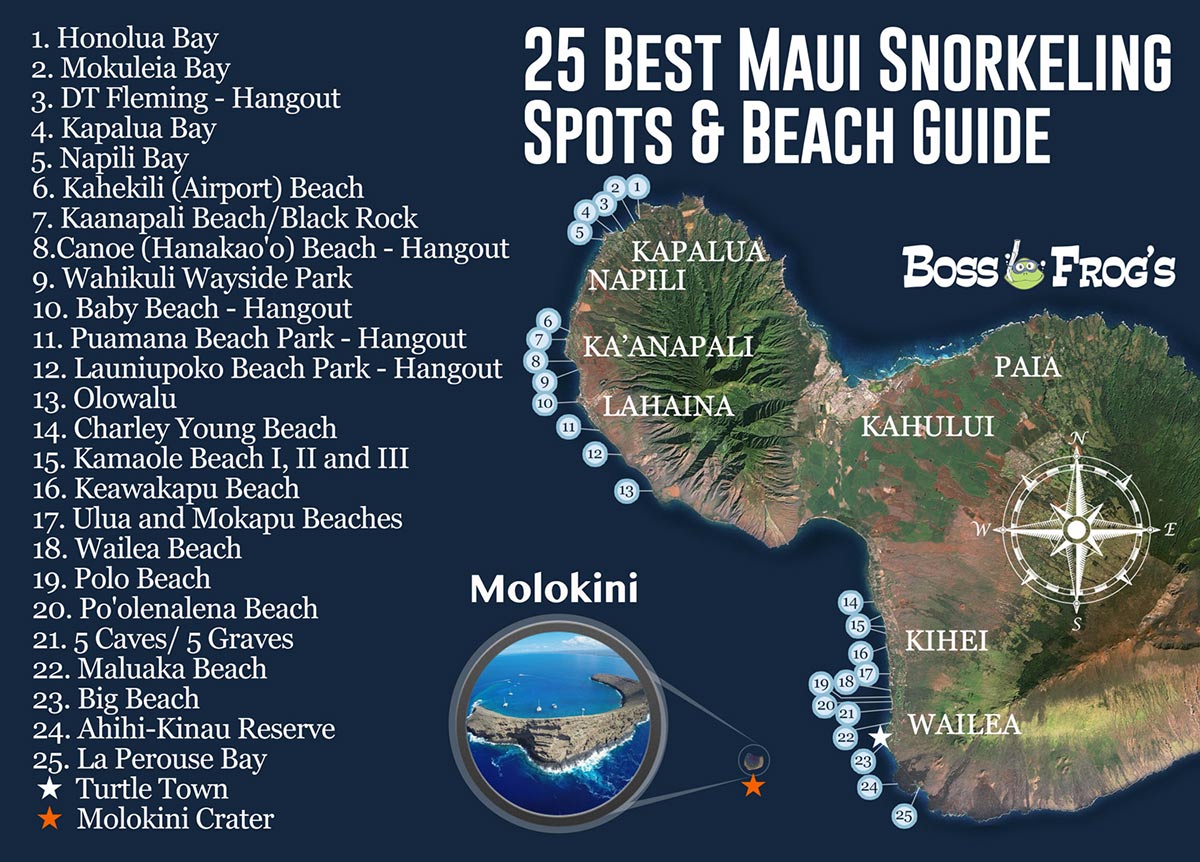
To help you choose the right spot, here is a comparison of the main snorkeling locations in Maui:
| Location | Visibility (ft) | Access | Best For |
|---|---|---|---|
| Molokini Crater | Up to 150 | Boat tour | Advanced, diverse fish |
| Ahihi Kinau | 50–100 | Walk from parking | Unique lava formations |
| Makena Landing | 40–80 | Beach entry | Turtle spotting |
| Honolua Bay | 60–120 | Short hike | Coral reefs |
| Kapalua Bay | 40–80 | Beach entry | Families, calm water |
| Black Rock | 40–70 | Beach entry | Turtles, cliff diving |
| La Perouse Bay | 40–70 | Rocky entry | Experienced snorkelers |
| Ulua Beach | 30–70 | Sandy entry | Beginners |
| Turtle Town | 40–80 | Beach entry | Sea turtles |
| Ho’okipa Beach | 30–60 | Beach entry | Turtles |
What To Expect: Marine Life And Conditions
Maui’s reefs are full of life. You can expect to see:
- Green sea turtles (honu) – especially at Turtle Town, Makena Landing, and Ho’okipa Beach
- Tropical fish – including butterflyfish, triggerfish, wrasse, and tangs
- Coral gardens – healthy coral at Honolua Bay and Molokini
- Eagle rays and sometimes monk seals
The best snorkeling conditions are usually in the morning, before the wind picks up. Visibility is highest when the ocean is calm. Avoid snorkeling after heavy rain, as runoff can reduce clarity.
Some spots, like Molokini and Honolua Bay, are protected as marine reserves. These areas have strict rules to protect sea life. Never touch coral or turtles, and keep a respectful distance.
How To Prepare For Snorkeling In Maui
Before you head out, make sure you are ready for safe and enjoyable snorkeling.
Equipment You’ll Need
- Mask and snorkel – Choose a comfortable mask that seals well
- Swim fins – Help you move easily and save energy
- Rash guard or wetsuit – Protects from sun and stings
- Reef-safe sunscreen – Avoids harming coral
- Life vest (optional) – Good for beginners
Renting gear is easy in Maui. Most beaches have nearby shops. If you plan to snorkel often, buying your own equipment is a smart investment.
Safety Tips
- Always snorkel with a buddy
- Check weather and surf reports before you go
- Stay in shallow water if you are a beginner
- Watch for currents and waves
- Do not feed or chase sea animals
One insight many beginners miss: Maui’s reefs can be sharp. Wearing water shoes protects your feet when entering or exiting.
When To Snorkel
Morning is best. Winds usually pick up after 11 a. m. , which reduces visibility and creates waves. Summer (May–September) brings calmer seas, but winter can be good on southern beaches.
What Makes Maui’s Snorkeling Unique
Unlike other destinations, Maui offers snorkeling right from the beach—no need for boats at most spots. The variety of sea life is impressive, and you can often see turtles and large schools of fish. Some areas, like Molokini, offer deep water and rare species not found elsewhere.
Another insight: Maui’s marine reserves, such as Ahihi Kinau and Honolua Bay, are managed by strict rules. This keeps reefs healthy and wildlife abundant, so you’ll see more than at unprotected sites.
Comparing Maui To Other Hawaiian Islands
If you wonder how Maui stacks up against other islands for snorkeling, here is a simple comparison:
| Island | Snorkel Sites | Marine Life | Accessibility |
|---|---|---|---|
| Maui | Molokini, Turtle Town, Honolua Bay | High diversity | Mostly beach entry |
| Oahu | Hanauma Bay, Sharks Cove | Good diversity | Some sites require hiking |
| Kauai | Tunnels Beach, Poipu | Moderate diversity | Beach entry |
| Big Island | Kahaluu, Captain Cook | Good diversity | Some sites boat-only |
Maui offers more beach-access snorkeling spots compared to the Big Island and Oahu, making it easier for families and new snorkelers.

Credit: www.auntiesnorkel.com
Practical Tips For Your Maui Snorkeling Trip
- Arrive early to get parking and enjoy calm water.
- Use reef-safe sunscreen to protect coral.
- Bring a waterproof camera for photos.
- Check local signs and lifeguard advice.
- Respect marine life—never touch, chase, or feed animals.
If you want to learn more about Maui’s marine conservation efforts, see the official Hawaii Department of Land and Natural Resources.
Frequently Asked Questions
How Do I Know If A Snorkeling Spot Is Safe?
Check surf and weather reports before you go. Look for lifeguard stations and warning signs. If the water is rough or murky, wait for better conditions. Always snorkel with a buddy for safety.
Can I See Sea Turtles At Every Snorkeling Spot?
No, turtles are more common at certain beaches like Turtle Town, Makena Landing, and Ho’okipa Beach. Look for rocky areas where turtles feed and rest. Never touch or chase them.
Should I Join A Snorkeling Tour Or Go Alone?
Joining a tour is best for spots like Molokini Crater, which requires a boat. Tours offer guides, gear, and safety. For most beach sites, you can snorkel on your own if you feel comfortable.
What Is Reef-safe Sunscreen, And Why Is It Important?
Reef-safe sunscreen uses ingredients that do not harm coral reefs. Maui’s laws ban sunscreens with oxybenzone and octinoxate. Using reef-safe products helps protect marine life and keeps the ocean healthy.
What Is The Best Time Of Year For Snorkeling In Maui?
Summer months (May–September) have calm seas and warm water. Winter can be good on southern beaches, but avoid rough conditions. Early morning is always best for clear visibility.
Snorkeling in Maui is an unforgettable experience. With its clear waters, colorful reefs, and friendly sea turtles, the island offers something for everyone. By choosing the right spot and preparing well, you will enjoy the beauty of Maui’s underwater world safely and responsibly.
Credit: bossfrog.com