

Traveling across the United States is a dream for many, but high costs often stop people before they even start. Flights, hotels, and food can add up fast. However, with the right approach, you can discover the USA without breaking your bank.
Whether you want to see big cities, national parks, or small towns, it’s possible to enjoy rich experiences on a budget. Let’s explore how you can travel the USA affordably, while still making the most of every mile.
Smart Ways To Plan Your Trip
A well-planned trip saves money from the start. Here’s how you can prepare for budget-friendly travel across the USA:
- Set a realistic budget. Decide how much you can spend each day, including transport, accommodation, food, and activities.
- Travel in the off-season. Visiting popular places like New York or Florida in winter, or national parks in late fall, means cheaper prices and fewer crowds.
- Pick your route wisely. Focus on regions with lower costs, such as the South or Midwest, if you want your money to go further.
- Use price comparison websites. Check platforms like Google Flights, Skyscanner, and Kayak to find the best deals for flights and rental cars.
- Book early, but not too early. For domestic flights, the sweet spot is usually 1-3 months before your travel date.
Finding Cheap Transportation
Getting around the USA is often the biggest expense, but there are many ways to save.
Buses And Trains
Long-distance buses like Greyhound, Megabus, and FlixBus offer the cheapest fares for city-to-city travel. Booking in advance can get you fares as low as $1-20. Amtrak trains are comfortable, but usually more expensive—yet deals and rail passes can help.
Rideshares And Car Rentals
For groups or families, renting a car can be cost-effective, especially in areas with poor public transit. Use apps like Turo for peer-to-peer rentals, which can be cheaper than traditional agencies. Rideshare apps like BlaBlaCar (mainly in big cities) or finding travel buddies on forums can also cut costs.
Domestic Flights
If crossing long distances, budget airlines such as Southwest, Spirit, or Frontier offer low fares—just beware of extra fees for bags or seat selection.
Comparing Transportation Options
Here’s a quick look at costs and convenience for common travel options:
| Mode | Average Cost (per 100 miles) | Best For | Downsides |
|---|---|---|---|
| Bus | $10-$20 | Budget travelers | Slow, few amenities |
| Train (Amtrak) | $20-$40 | Comfort, scenery | Limited routes |
| Budget Airline | $30-$70 | Long distances | Extra fees |
| Car Rental | $40-$80 (plus gas) | Groups, remote areas | Parking, insurance |
Non-obvious tip: Many US cities have free or cheap public transport downtown—check local transit websites for details.
Affordable Places To Stay
Accommodation eats up a big slice of your travel budget. But with creativity, you can find a bed for less.
Hostels And Motels
Hostels are not just for Europe—cities like New York, Los Angeles, and Chicago have them, with dorm beds from $25-$50 per night. Motels, often on highways or city edges, can be as low as $40-$70 for a private room.
Alternative Options
- Couchsurfing: Stay with locals for free through Couchsurfing.com. It’s safe if you read reviews and communicate clearly.
- Airbnb: Renting a room (not a whole home) is usually cheaper than hotels, especially in smaller cities.
- Camping: National and state parks offer campsites from $10-$30 per night. Some even have showers and kitchens.
Comparing Accommodation Types
Here’s a comparison of typical costs and features:
| Type | Average Cost | Privacy | Best Feature |
|---|---|---|---|
| Hostel Dorm | $25-$50 | Low | Meet travelers |
| Motel | $40-$70 | Medium | Private rooms |
| Airbnb Room | $35-$80 | Medium | Local experience |
| Campsite | $10-$30 | Varies | Nature access |
Insider tip: Some hostels and campgrounds offer free breakfast or dinner—look for these extras when booking.
Eating Well For Less
Food in the USA can be pricey, but you don’t have to live on fast food. Here’s how to eat well on a budget:
Supermarkets And Food Courts
Buy groceries at chains like Walmart, Trader Joe’s, or Kroger. Many have ready-to-eat meals for $5-$10. Public markets and food halls in big cities offer cheap, tasty local dishes.
Street Food And Diners
Classic diners often serve huge breakfasts for $5-$8. Food trucks in cities like Portland or Austin sell meals from $3-$7. In small towns, look for “mom and pop” restaurants, which are often cheaper and more filling than chains.
Cooking Your Own Meals
If your hostel or Airbnb has a kitchen, make your own breakfast or dinner. Even a simple sandwich or salad from the store saves a lot over eating out every meal.
Practical tip: Always carry a reusable water bottle—tap water is safe to drink almost everywhere in the US, so you can skip buying drinks.
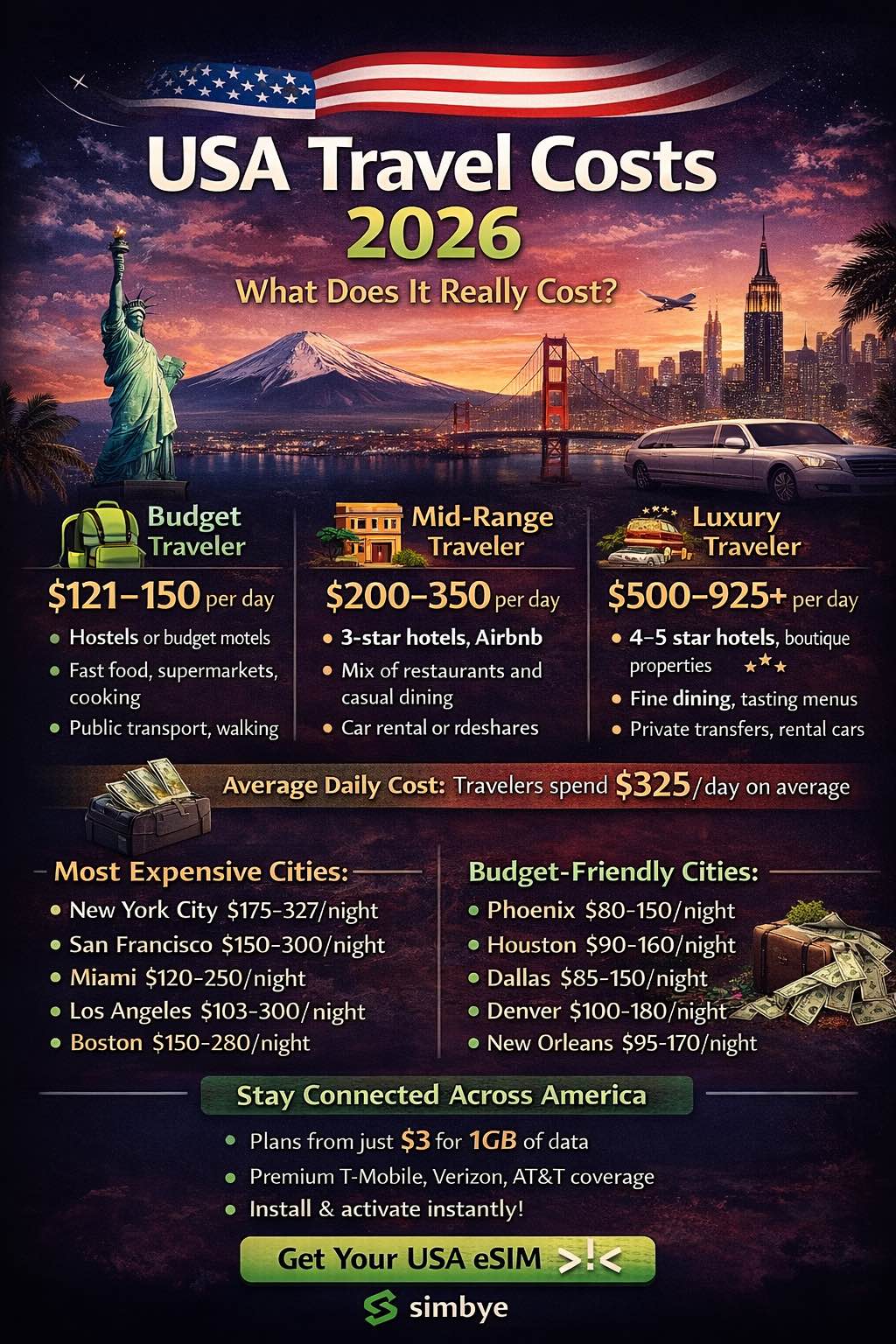
Credit: simbye.com
Budget-friendly Things To Do
The USA is full of free and low-cost attractions. Here’s how to fill your days without emptying your wallet:
National Parks And Nature
Over 60 national parks offer hiking, camping, and wildlife for a $20-$35 entrance fee per car (valid for several days). Consider buying the America the Beautiful Pass for $80, which covers all national parks for a year.
Free City Sights
Many cities have free museums on certain days (like the Smithsonian museums in Washington, D.C.), free outdoor concerts, or festivals. Research local calendars before you arrive.
Walking Tours And Street Art
Join free walking tours—just tip your guide. Self-guided walking apps can show you neighborhoods, street art, or food spots at your own pace.
Affordable Attractions
Use discount passes (like CityPASS or Go City) for major tourist cities. These can save up to 50% on attractions like aquariums, observation decks, or museums.
Hidden gem: Many universities have free art galleries, gardens, and museums open to the public.
How To Save On Everyday Expenses
Small daily choices add up to big savings.
Mobile Data And Connectivity
Instead of expensive roaming, buy a prepaid SIM card from companies like T-Mobile or AT&T for $30-$40 per month. Free Wi-Fi is common in cafes, libraries, and even many parks.
Banking And Payments
Avoid ATM fees by using cards with no foreign transaction fees. Try to use cards for payments—many places now accept contactless or mobile pay.
Laundry And Essentials
Use laundromats (typically $2-$4 per wash) instead of expensive hotel laundry. Dollar stores are great for toiletries, snacks, and travel items.
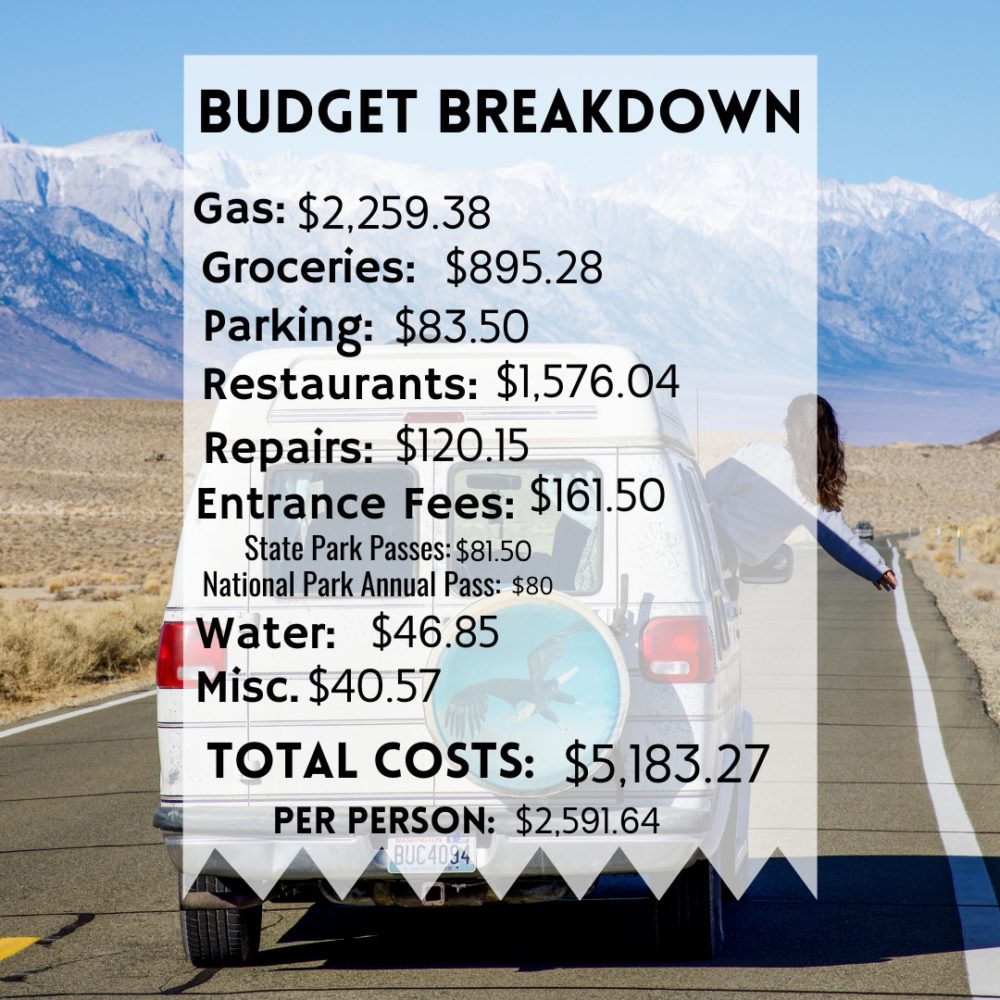
Credit: beyondthebucketlist.co
Mistakes To Avoid When Traveling Cheap
Even budget travelers can make costly errors. Here are some common mistakes—and how to avoid them:
- Not checking for hidden fees. Budget airlines, car rentals, and even hostels may charge extra for bags, bedding, or cleaning.
- Ignoring local taxes. Hotel and sales taxes can add 10-15% to advertised prices, especially in big cities.
- Overpacking. Extra luggage means higher transport costs and more hassle. Pack only what you truly need.
- Skipping travel insurance. Medical costs in the US are high. Budget insurance can save you thousands if you get sick or injured.
- Trying to see too much. Long distances mean more money and time on the road. Focus on one or two regions for a deeper, cheaper experience.
Expert tip: Always check the latest travel alerts and local COVID-19 guidelines. Some attractions may require reservations or have capacity limits.
Example Itinerary: 2 Weeks On A Tight Budget
To see what’s possible, here’s a sample two-week plan for budget travel:
- Days 1-3: New York City
Stay in a hostel ($40/night), use the subway, visit free museums, walk Central Park.
- Days 4-6: Washington, D.C.
Take a Megabus ($20), explore Smithsonian museums (free), stay in a dorm ($35/night).
- Days 7-9: Nashville, Tennessee
Fly budget airline ($60), stay in a motel ($45/night), listen to live music at free venues.
- Days 10-14: Great Smoky Mountains
Bus to the park ($25), camp ($15/night), hike and enjoy free ranger programs.
Estimated total cost: $1,000-$1,200 (excluding flights to/from the US).
This approach balances city sights, culture, and nature, using affordable transport and accommodation. Adjust the route based on your interests and flight deals.

Credit: budgettravelwithgabby.com
Frequently Asked Questions
How Much Money Do I Need Per Day To Travel The Usa On A Budget?
A realistic daily budget is $50–$80 per person if you use hostels, public transport, cook some meals, and focus on free or low-cost activities. City visits may be higher, while rural areas and camping can be cheaper.
What Is The Cheapest Way To Travel Between Us Cities?
Buses like Greyhound and Megabus are the cheapest for most routes, sometimes as low as $1–$20 with early booking. For long distances, budget airlines like Spirit or Frontier can be competitive. Trains are rarely the cheapest but offer good comfort.
Are There Any Safety Concerns For Budget Travelers In The Usa?
The USA is generally safe, but always research neighborhoods before booking cheap accommodation, especially in big cities. Use lockers in hostels, keep valuables secure, and be aware of your surroundings, especially at night.
Can I Work Or Volunteer While Traveling In The Usa To Save Money?
Most visitors cannot legally work on a tourist visa. However, you can volunteer (unpaid) in some places, like hostels or farms, in exchange for a bed or meals. Always check visa rules before planning work exchanges.
Where Can I Find More Tips And Up-to-date Deals For Us Travel?
Websites like The Points Guy, Nomadic Matt, and official tourism boards offer detailed guides, up-to-date deals, and advice. For official info on national parks, visit the National Park Service website.
Traveling the USA on a budget is not just possible—it can be one of the most rewarding ways to see the country. With smart planning, flexibility, and a sense of adventure, you’ll discover that the best experiences often come from the journey itself, not from how much you spend.
Safe travels!