

Doing a facial at home can give your skin a fresh, healthy glow without the high price of a spa. With the right steps, you can get real results—whether you want to boost hydration, clear your pores, or just relax.
This guide will show you how to do a facial at home, what products to use, and how to adapt each step for your skin type. You’ll also discover some common mistakes people make and how to avoid them for the best results.
Why Try A Facial At Home?
Professional facials are great, but not everyone has the time or budget for regular spa visits. Home facials are a practical way to:
- Deep clean your skin
- Remove dead skin cells
- Improve blood flow and skin tone
- Hydrate and calm your face
- Give yourself a moment of self-care
A good home facial can make your other skincare products work better, too. Plus, you can adjust every step for your unique needs.
What You’ll Need
You don’t need fancy equipment or expensive products. Here’s what you’ll want on hand:
- Gentle cleanser
- Exfoliator (scrub or enzyme-based)
- Steam source (bowl of hot water or a warm towel)
- Face mask (clay, hydrating, or sheet)
- Toner
- Serum (vitamin C, hyaluronic acid, etc.)
- Moisturizer
- Sunscreen (if you’re doing this in the daytime)
- Clean towels and headband
If you don’t have everything, you can swap in simple alternatives. For example, honey can be a natural mask, and a clean washcloth works for steam.

Credit: www.youtube.com
Step-by-step: How To Do A Facial At Home
Let’s break down each step and why it matters.
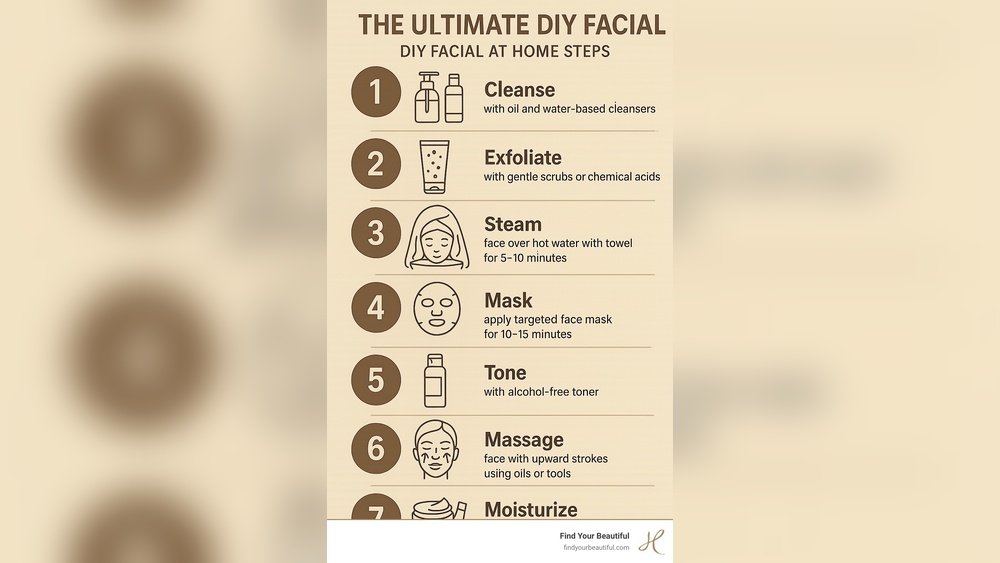
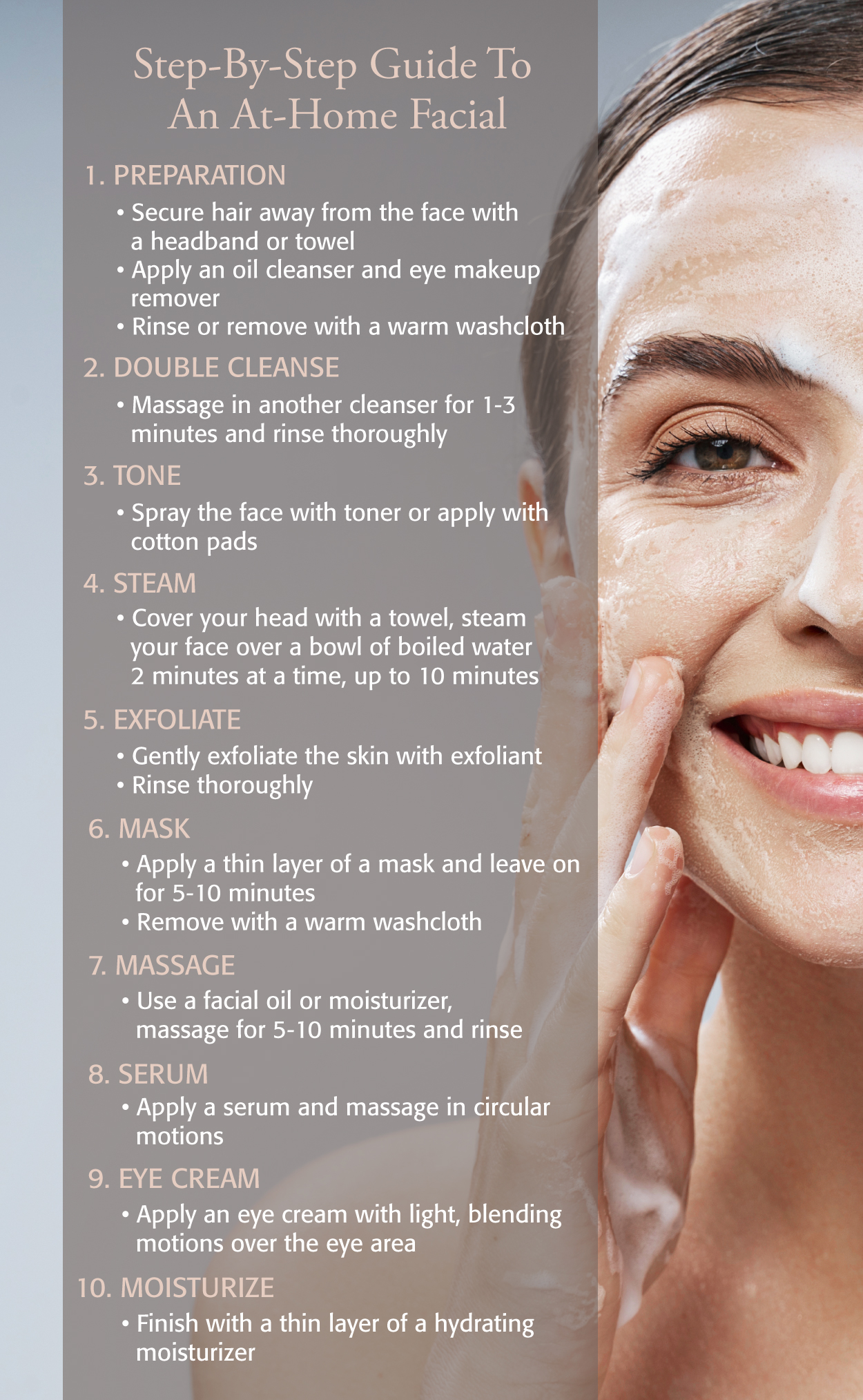
1. Cleanse
Start by removing makeup and oil. Use a gentle cleanser suitable for your skin type. Massage for 30–60 seconds to help lift dirt and old sunscreen.
2. Exfoliate
Next, use an exfoliator to remove dead skin. Choose a scrub with fine grains or a chemical exfoliant (like glycolic acid) if your skin is sensitive. Don’t scrub too hard—gentle circles for 1 minute is enough.
3. Steam
Steaming opens pores and softens any buildup. Fill a bowl with hot (not boiling) water. Drape a towel over your head and lean over the bowl for 5–8 minutes. If you prefer, use a warm towel instead.
4. Apply A Face Mask
Pick a mask that fits your needs:
- Clay or charcoal for oily or acne-prone skin
- Hydrating or cream masks for dry skin
- Sheet masks for a quick boost
Leave it on for 10–15 minutes, following the package instructions.
5. Tone
After rinsing off the mask, use a toner. This helps balance your skin’s pH and removes any leftover residue. Use a cotton pad or gently pat it in.
6. Treat
Apply a serum—vitamin C for brightening, hyaluronic acid for hydration, or niacinamide for redness. Serums have active ingredients that soak in best after a facial.
7. Moisturize
Finish with a moisturizer. This locks in hydration and protects the skin barrier. If it’s daytime, finish with sunscreen for extra protection.
Below is a comparison of three common face masks:
| Mask Type | Best For | Main Benefit |
|---|---|---|
| Clay Mask | Oily, acne-prone skin | Removes oil, clears pores |
| Hydrating Mask | Dry, sensitive skin | Boosts moisture, soothes |
| Sheet Mask | All skin types | Quick hydration and glow |
Tips For Different Skin Types
Your skin type affects your choices. Here’s how to adapt each step:
| Skin Type | Exfoliator | Mask | Moisturizer |
|---|---|---|---|
| Oily | Gel or enzyme | Clay | Oil-free gel |
| Dry | Gentle scrub | Hydrating | Cream-based |
| Sensitive | Enzyme (no scrub) | Soothing (oat or honey) | Fragrance-free |
Credit: relaxthespa.com
Common Mistakes To Avoid
Many people skip important steps or overdo things during a home facial. Here are some missteps to watch for:
- Skipping sunscreen after a facial. Your skin is extra sensitive—protect it from UV rays.
- Using harsh scrubs. Over-exfoliating can damage your skin barrier, leading to redness and irritation.
- Leaving masks on too long. This can dry out or irritate your skin, especially with clay masks.
- Ignoring your skin type. Products for oily skin won’t work for dry skin and vice versa.
- Not cleaning your tools or hands. Dirty hands or towels can spread bacteria and cause breakouts.
How Often Should You Do A Facial?
Most skin types do well with a home facial once a week. If your skin is sensitive or you use strong treatments (like retinol or acids), every two weeks may be better. Overdoing facials can lead to irritation and more problems.

Credit: www.thebeautysnoop.com
Home Facial Vs. Professional Facial
You might wonder if a home facial can really match the results of a spa. Here’s a quick comparison:
| Feature | Home Facial | Professional Facial |
|---|---|---|
| Cost | Low (under $10 per session) | $50–$150 per session |
| Convenience | Anytime, at home | By appointment only |
| Customization | DIY, based on your products | Expert analysis and tools |
| Results | Good with routine | Deeper, longer-lasting |
Frequently Asked Questions
How Long Does A Home Facial Take?
A full home facial usually takes 30–45 minutes. You can do a quick version in 15 minutes by skipping steam or using a fast mask.
Can I Do A Facial If I Have Acne?
Yes, but choose gentle, non-comedogenic products. Avoid harsh scrubs and heavy creams. Clay masks can help, but don’t overdo it.
What Should I Do Before Starting A Facial?
Wash your hands, tie back your hair, and gather your products. Always start with a clean face and clean towels.
Is It Okay To Use Kitchen Ingredients?
Some kitchen staples—like honey, yogurt, or oatmeal—are safe for most people. However, avoid lemon juice or baking soda, which can be too harsh.
Where Can I Learn More About Skincare Routines?
For more in-depth advice, visit the American Academy of Dermatology.
A home facial is a great way to care for your skin and relax at the same time. With the right steps and products, you can see real improvements in your skin’s look and feel. Remember, consistency is key—regular gentle facials will give you the best results over time.
Enjoy your self-care!