
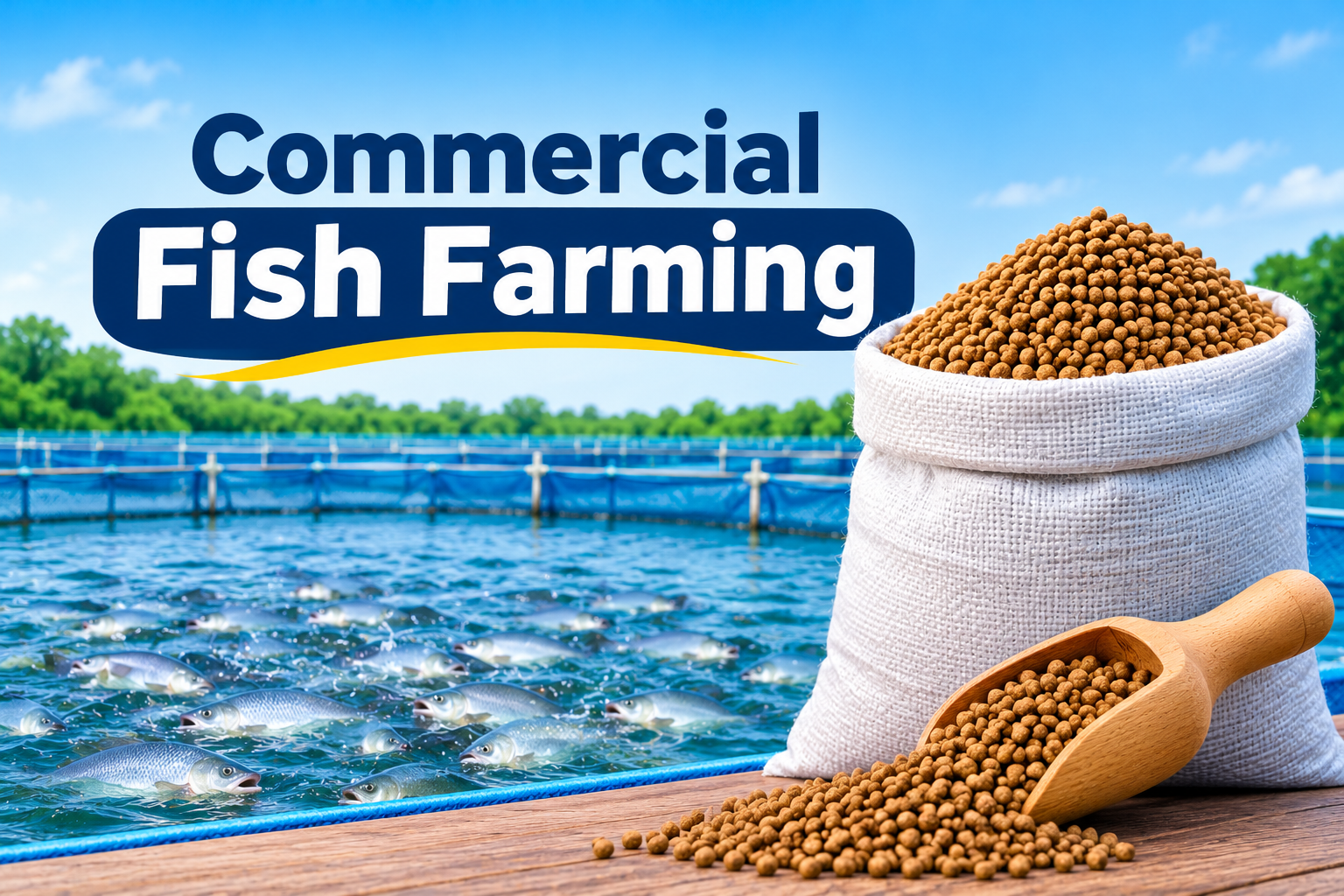
Feed is the biggest expense in fish farming, often 50-70% of total production costs. Choosing the right commercial fish farming feed can decide whether your farm makes a profit or struggles. This guide explains everything in simple terms so you can feed smarter.
What Is Commercial Fish Farming Feed?
Commercial fish feed is a balanced, ready-made diet made in a factory for farmed fish. Unlike homemade or natural feed, it is carefully formulated so every pellet contains the right mix of protein, fats, carbohydrates, vitamins, and minerals.
Why it matters: Wild fish find their own food. Farmed fish depend completely on you. If the feed is poor, the fish grow slowly, get sick easily, and cost you more money.
How Commercial Fish Feed Is Made
Most fish feed is made using one of two methods:
- Extruded feed: Ingredients are cooked under heat and pressure. The pellets are more digestible, can float or sink, and stay stable in water longer. This is the most popular choice.
- Pelleted (pressed) feed: Ingredients are compressed through a die. It is usually cheaper, sinks quickly, and may break down faster in water.
Tip: Extruded feed often costs more per bag but can give a better feed conversion ratio, so it may save money overall.
Common Ingredients in Fish Feed
- Fishmeal and fish oil: High-quality protein and fat, but expensive and increasingly limited.
- Soybean meal: The most widely used plant protein replacement.
- Corn, wheat, and rice bran: Affordable carbohydrate sources.
- Poultry by-product meal: A cost-effective animal protein.
- Vitamin and mineral premix: Fills any nutritional gaps.
Many modern feeds replace part of the fishmeal with plant proteins to lower costs. This works well when the feed is properly balanced.
How to Choose the Best Commercial Fish Farming
- Match your species. Different fish have different protein and energy needs.
- Check the growth stage. Use starter, grower, or finisher feed at the right time.
- Pick the right pellet size. If pellets are too large, small fish cannot eat them. If they are too small, feed is wasted and water gets dirty.
- Read the label. A good label shows protein, fat, fiber, moisture, and ingredients.
- Check pellet quality. Good pellets are firm, uniform, and don’t crumble into dust. They should hold together in water for several minutes.
- Buy from trusted suppliers. Consistent quality means consistent growth.
- Compare the FCR, not just the price. A cheap feed with a poor FCR can cost more in the end.
Understanding Feed Conversion Ratio (FCR)
FCR tells you how much feed is needed to grow 1 kg of fish.
Formula: FCR = Total feed given (kg) ÷ Weight gained by fish (kg)
Example: If you feed 15 kg and your fish gain 10 kg, your FCR is 1.5.
- Lower FCR = better. You use less feed per kilo of fish.
- Good FCR for tilapia: around 1.4-1.8
- Good FCR for catfish: around 1.5-2.0
- Good FCR for salmon: around 1.1-1.3
Cost comparison example:
- Feed A costs $0.80/kg with an FCR of 1.4 = $1.12 to produce 1 kg of fish.
- Feed B costs $0.65/kg with an FCR of 2.0 = $1.30 to produce 1 kg of fish.
The “cheaper” feed actually costs more.
How Much and How Often to Feed
Feeding rate is usually based on a percentage of the fish’s body weight per day.
| Fish Size | Feeding Rate (Approx.) | Meals per Day |
| Fry (under 5 g) | 8-15% | 4-6 |
| Fingerlings (5-50 g) | 4-8% | 3-4 |
| Juveniles (50-200 g) | 2-4% | 2-3 |
| Adults (200 g+) | 1-2% | 1-2 |
Smaller fish eat a larger percentage of their weight because they grow faster. Feeding rates drop as fish get bigger. Adjust based on water temperature and how well the fish are eating.
Tips to Reduce Feed Costs
- Don’t overfeed. Uneaten feed wastes money and pollutes water. Feed for 15-20 minutes and remove the excess observation point: stop when fish slow down.
- Feed at consistent times. Fish learn the routine and eat more efficiently.
- Feed during cooler parts of the day in hot weather, when oxygen levels are higher.
- Store feed properly. Keep it in a cool, dry, ventilated place off the floor and away from sunlight. Moldy feed can poison fish.
- Use feed within 2-3 months of the production date for best freshness and nutrition.
- Monitor water quality. Poor oxygen, high ammonia, or extreme temperatures make fish eat less.
- Sample fish regularly. Weigh a small group every 1-2 weeks and adjust the feeding amount.
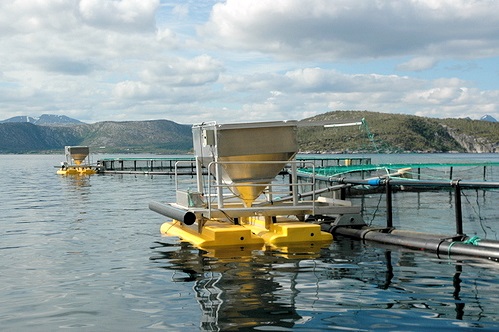
- Reduce feed waste. Use feeding trays or automatic feeders for better control.
- Buy in bulk from trusted suppliers if you have proper storage.
Common Mistakes to Avoid
- Overfeeding in hot weather or low-oxygen water
- Using the wrong protein level for the species
- Choosing feed by price alone
- Ignoring pellet size as fish grow
- Storing feed in damp or sunny places
- Switching feed brands suddenly (do it gradually over 5-7 days)
- Not tracking FCR and growth records
Signs Your Feed Is Working
- Fish eat eagerly and quickly
- Steady, even growth across the pond
- Low mortality and few disease problems
- Clear water with little leftover feed
- A good FCR within the expected range
Signs Your Feed Is Not Working
- Fish leave feed uneaten
- Uneven or slow growth
- Cloudy or foul-smelling water
- Frequent disease outbreaks
- A rising FCR over time
Frequently Asked Questions
What is the best commercial fish farming feed?
The best feed is one that matches your species, growth stage, and budget while delivering a good FCR. There is no single best brand for every farm.
How long can fish feed be stored?
Generally 2-3 months after production if stored in a cool, dry place. Check the manufacture date on every bag.
Can I make my own fish feed?
Yes, but homemade feed is often less balanced and less water-stable. For Commercial Fish Farming farms, factory-made feed usually gives more consistent results.
Why is my fish not eating the feed?
Common causes include poor water quality, low oxygen, extreme temperature, stress, disease, or old and spoiled feed.
How do I lower my fish feed cost?
Reduce waste, improve your FCR, feed the right amount, store feed properly, and keep your water quality high.
Final Thoughts
The right commercial fish farming feed improves growth, reduces disease, and increases profit. Choose feed that matches your fish species and size, check the quality, and track your FCR. Combine that with smart feeding habits and good water management, and you will see better results and lower costs.