
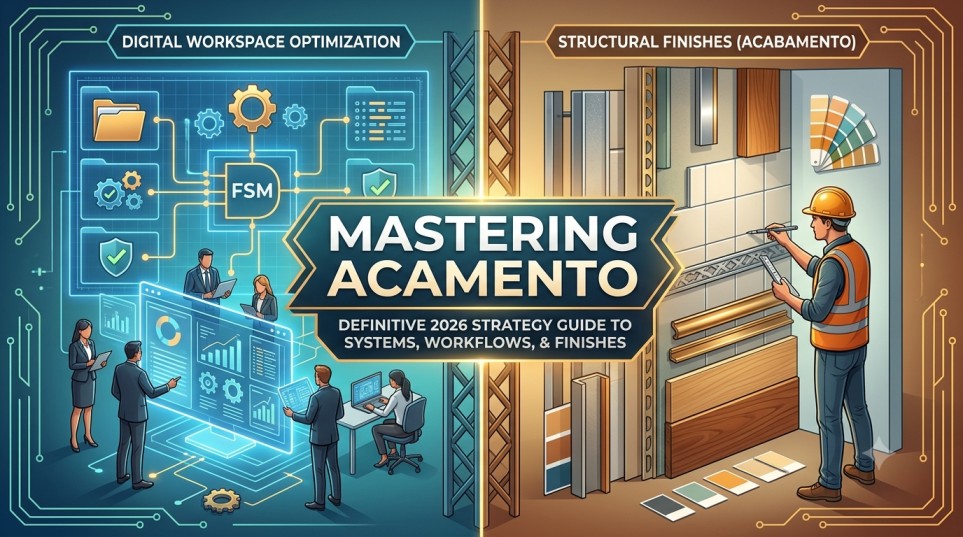
Acamento is a step-by-step method for finishing a project with precision. You can use it to set up data in a digital workspace, or to apply final surface finishes in construction. It works like a Finite State Machine (FSM): a project moves through strict quality checks until it is verified and ready for production.
Quick summary
- Acamento = the final, precision-focused phase of a project.
- It follows 4 steps, in a fixed order.
- 2026 costs run from $1,500 to $25,000+, depending on project size.
- In construction, “acamento” is usually a spelling of “acabamento” (finishing work).
In this guide you will learn what acamento means, how the FSM blueprint works, the four steps, 2026 costs and timelines, and how to keep quality high. A short FAQ at the end answers common questions.
What Is Acamento and Why Does It Matter?
The word “acamento” is used in two ways today.
- In digital workspaces: it means the logic used to organize files, automate permissions and connect different APIs in one clean system.
- In construction and trade: it is a common spelling variant, and a frequent search misspelling, of the Portuguese word acabamento. Acabamento covers the final surface treatments, trims and architectural finishes in commercial construction.
Project managers should know this difference. Whether you are finishing a software interface or a real estate development, the acamento phase shapes the whole user experience. It turns a raw, basic project into a polished, high-performance asset.
If this phase is skipped or rushed, you get structural problems, lower asset value and unhappy users right away.
Technical Blueprint: The FSM Architecture of an Acamento Workspace
Digital acamento platforms run on Finite State Machine (FSM) logic. In this model, a system can be in only one defined state at a time. When a user sets up a workspace or connects outside data, the information enters a controlled pipeline. It can move to the next state only when clear, pre-set conditions are met.
Data architecture rule: Data can never skip a quality checkpoint. An asset marked “Raw Input” cannot become “Finalized Output” until it passes the validation scripts set by the system’s conditioned links.
The FSM model removes the guesswork of ad-hoc digital folders. When every state is mapped, from first ingestion to final archive, teams can build precise automation rules. This keeps integrations stable, protects security settings and breaks down data silos.
The 4-Step Acamento Execution Framework
An acamento workflow needs four stages, and the order matters. Changing the order creates technical debt that keeps growing, or physical alignment errors.
Step 1: Workspace Initialization and Tool Integration
Set the baseline of your environment first. Split users into tiers, such as freelancers, developers and enterprise administrators. Then set up your main API webhooks and connect your collaboration tools, so data flows smoothly into the central hub.
Step 2: Structural Material Prep and Precision Measurement
Set exact tolerances. This applies to layout limits in a UI design file, and also to preparing concrete surfaces for finishing layers. Measure down to the pixel or millimeter, and make sure the base can carry the weight of the final layer.
Step 3: State Condition Mapping and Automation Rules
Program the rules that decide how assets move through the workspace. Build clear “If/Then” conditions in your FSM engine. Notifications, approval requests and status changes then trigger instantly when an asset reaches its milestone.
Step 4: Quality Inspection and Surface Level Calibration
Audit the finished workflow or physical installation against global quality management frameworks. Anything outside your set tolerances goes back to Step 2 and is fixed before public launch.
Acamento Project Costs and Timelines in 2026
Budget and time depend on how complex the project is and which quality tier you choose. The table below shows typical 2026 ranges for standard and enterprise projects.
| Project Tier | Financial Allocation (USD) | Operational Time Horizon | Complexity Rating | Automation Potential |
|---|---|---|---|---|
| Standard Tier | $1,500 – $3,500 | 12 – 24 working hours | Low to moderate | Up to 45% of workflows |
| Premium / Enterprise Tier | $8,500 – $25,000+ | 60 – 120 working hours | High (multi-system integration) | Up to 85% of workflows |
- Standard projects: most of the money goes to basic software seat licenses and core component materials.
- Enterprise projects: the budget covers custom API development, advanced industrial sealants or hardware finishes, and dedicated engineering oversight for stable, cross-system performance.
Maintaining Quality and Preventing Technical Debt
Long-term success depends on following the ISO 9001:2015 quality management standard from the International Organization for Standardization. It requires consistent, repeatable measurement, so final results match the original specifications.
The quality flow works like this:
- Raw asset or material ingestion: the project starts here.
- FSM condition validation: each item is checked against the quality gate.
- If it fails: it goes to immediate refactoring or repair, then returns to validation.
- If it passes: it moves to ISO 9001:2015 compliance sign-off.
To fight material wear and digital technical debt, engineering and facilities teams should keep a regular refactoring schedule.
- Digital systems: update old code libraries and audit API connections often.
- Physical spaces: measure surface wear with the Gloss Retention Index to catch damage before structural failure.
Modern 2026 AI layout engines can automate these checks. These machine-learning models watch active systems, spot problems, predict wear and optimize space layouts in real time.
Frequently Asked Questions About Acamento
What is an acamento workflow?
It is a structured method for the final, precision-focused phase of a project. It uses an FSM architecture to move work through strict quality gates until it is verified and ready for production.
Is acamento free to use for personal projects?
Basic personal tiers of digital acamento workspace tools are usually free, but they limit team collaboration and API integrations. Advanced features, automated FSM logic and enterprise-grade security need a paid monthly subscription.
What is the difference between acamento and acabamento in construction?
“Acamento” is a common typo or regional search variant of “acabamento,” which means the finishing phase of construction. In industrial workflows, acabamento covers surface looks, protective coatings and final hardware trim installation.
Can I run acamento workflows on mobile devices?
Yes. Modern digital acamento tools are fully responsive and sync with iOS and Android. Still, complex admin tasks, such as first-time FSM state setup and deep API mapping, are best done in a desktop browser.
How does the system keep sensitive enterprise data secure?
Enterprise workflows use end-to-end AES-256 encryption for data at rest and in transit. They also connect to identity providers through SAML Single Sign-On (SSO), which enforces strict role-based access control across all active workspaces.
Final Thoughts
A well-run acamento phase separates a merely working project from a polished, high-value one. Follow the four steps in order, enforce every quality gate, plan a realistic budget for your tier, and schedule regular maintenance. Do this and your workflow stays stable, secure and ready for production.