
Traveling the USA on a budget can feel overwhelming. The country is vast, and costs can add up quickly. But with smart planning, you can see the best of America without breaking the bank. Whether you dream of road-tripping across Route 66, hiking in national parks, or exploring vibrant cities, there are ways to make your journey affordable, memorable, and fun.
This guide will show you how to travel the USA on a budget—covering transportation, accommodation, food, sightseeing, and more—with practical tips, real examples, and insights travelers often miss.
Planning Your Budget Trip
Traveling on a budget starts before you leave home. Careful planning can save you hundreds, sometimes thousands, of dollars. Start by deciding when and where you want to go. Off-peak seasons (like late fall or early spring) usually mean lower prices on flights and hotels. Make a basic route and list what you want to see, but stay flexible—sometimes, the cheapest way is not the most obvious.
Set A Realistic Budget
Write down how much you can spend overall, then break it into categories: transportation, accommodation, food, attractions, and extras. Use free budget apps like Trail Wallet or TravelSpend to track your spending.
Research In Advance
Check for free days at museums, discount passes for cities, and public transportation options. For example, the National Park Service offers free entrance on certain days each year. Many cities have tourist passes that cover multiple attractions for one price.
Look For Hidden Costs
Travelers often forget about taxes, tips, and resort fees. In the USA, these can add 15–20% to your bills. Always check if your hotel or Airbnb adds extra cleaning or service fees.
Affordable Transportation Options
Getting around the USA can be expensive, but there are ways to save money if you know where to look.
Comparing Transportation Choices
Here’s a quick look at common ways to travel and their estimated costs:
| Transport Type | Average Cost (per 100 miles) | Best For | Budget Tips |
|---|---|---|---|
| Bus (e.g., Greyhound, Megabus) | $15–$30 | Solo travelers, flexible schedules | Book early, travel weekdays |
| Train (Amtrak) | $25–$40 | Scenic routes, relaxed travel | Use rail passes, look for deals |
| Car Rental | $40–$60 + gas | Groups, remote areas | Share with others, avoid airport pickup |
| Domestic Flights | $50–$150 | Long distances, limited time | Travel light, compare airports |
Buses And Trains
Buses like Greyhound, Megabus, and FlixBus connect most big cities and many smaller towns. If you book early, you can find tickets as low as $1–$5. Megabus often has “$1 deals” if you’re flexible with dates and times.
Amtrak trains are slower and sometimes more expensive than buses, but the views can be stunning—especially on routes like the California Zephyr or Coast Starlight. Consider the USA Rail Pass if you plan to take multiple trips; it offers 10 segments in 30 days for a fixed price.
Car Rentals And Rideshares
Renting a car is sometimes the cheapest option for groups or if you’re exploring national parks and rural areas. To save:
- Avoid picking up cars at airports (extra fees)
- Use apps like Turo for peer-to-peer car sharing
- Check for unlimited mileage deals
If you’re solo, look for rideshare boards on sites like BlaBlaCar or hostel notice boards. Many travelers split gas costs this way.
Domestic Flights
For long distances, flying can save both time and money. Use flight comparison tools like Google Flights or Skyscanner. Southwest and Spirit Airlines often offer flash sales. Remember: Budget airlines charge extra for checked bags, seat selection, and sometimes even carry-ons.
Pro tip: Sometimes flying from a smaller, nearby airport is much cheaper. Check all airports within a few hours’ drive.
Credit: beyondthebucketlist.co
Saving On Accommodation
Where you sleep can be your biggest expense—or a place to save big.
Accommodation Options Compared
| Type | Average Price/Night | Pros | Cons |
|---|---|---|---|
| Hostel Dorm | $25–$50 | Social, kitchen access, central locations | Less privacy, limited in small towns |
| Budget Motel | $50–$80 | Private room, parking, easy to find | Can be basic, variable quality |
| Airbnb/Short-Term Rental | $40–$100 | Local experience, kitchen, all areas | Cleaning fees, sometimes higher than hotels |
| Camping | $10–$35 | Nature, cheapest option | Need gear, weather issues |
Hostels And Motels
Hostels are common in cities like New York, San Francisco, and Los Angeles, but rare in smaller towns. Use Hostelworld or HI USA to find beds. Many hostels offer free breakfast, free WiFi, and sometimes free city tours. Motels—like Motel 6 or Super 8—are a classic American budget choice, especially for road trips.
Alternative Accommodation
- Couchsurfing: Stay with locals for free. It’s safe if you check reviews, and you’ll get inside tips.
- House-sitting: Take care of someone’s house and pets while they’re away. Try sites like TrustedHousesitters.
- Camping: National and state parks offer campsites, often with showers and toilets. Some are first-come, first-served, others need reservations.
Book Smart
Prices can change fast. Book in advance for popular places, but last-minute deals are common in cities. If you’re staying a week or more, ask for a discount—many hosts and motels will say yes if you ask politely.
Non-obvious insight: Sometimes staying outside a big city (in a suburb) and commuting in by train or bus is much cheaper than staying downtown.
Eating Well Without Overspending
Food is part of the adventure, but eating out three times a day adds up quickly. Here’s how to eat well and stay on budget.
Shop Like A Local
Visit grocery stores like Trader Joe’s, Walmart, or Safeway. Many have fresh salads, sandwiches, and hot meals for $5–$8. Buy snacks and breakfast food to keep costs down.
Choose Your Restaurants
When you do eat out, look for lunch specials or early bird menus. Food trucks and diners often serve big meals for $8–$12. In big cities, check out international neighborhoods—Chinatown, Little Italy, or Mexican areas usually have tasty, cheap eats.
Cook Your Own Meals
If your hostel, Airbnb, or motel has a kitchen, cook simple meals. Instant noodles, pasta, and stir-fries are easy and cheap. Cooking a few meals can save you $100+ on a weeklong trip.
Practical tip: Many supermarkets have microwave stations and free plastic cutlery for travelers.
Don’t Forget Tap Water
Tap water in the USA is safe to drink almost everywhere. Bring a reusable bottle and fill up at fountains—saving money and plastic waste.

Credit: budgettravelwithgabby.com
Affordable Sightseeing And Activities
You don’t need to spend a fortune to experience America’s best sights. Many top attractions are free or low-cost with a little research.
National Parks And Nature
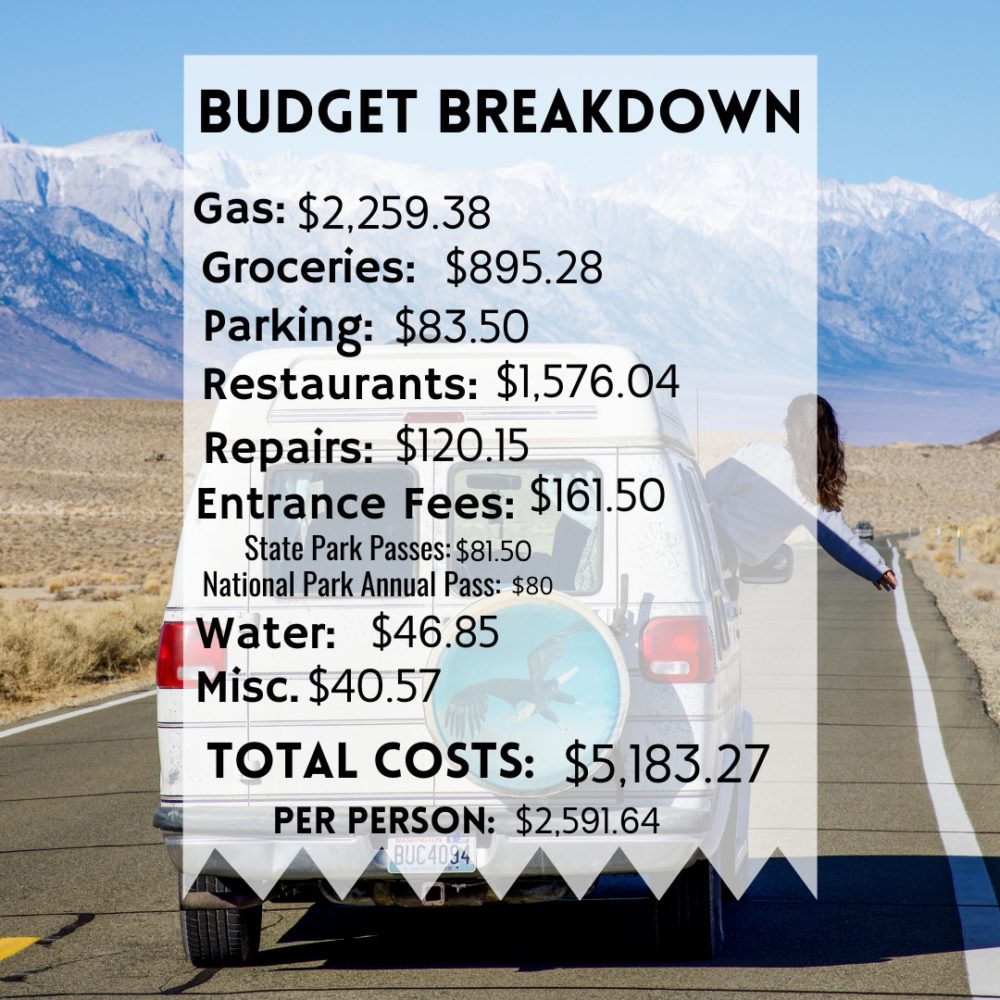
The USA’s national parks are world famous. Entrance fees are usually $20–$35 per car, but the America the Beautiful Pass costs $80 for unlimited entry to all national parks for a year. If you’re visiting three or more parks, this pass pays for itself.
Hiking, swimming, and sightseeing in state parks, forests, and beaches are often free or cost just a few dollars.
Free City Attractions
Almost every city has free highlights:
- Washington, DC: All Smithsonian museums are free
- Chicago: Millennium Park and Lincoln Park Zoo are free
- New York City: Walk the High Line, visit Central Park, or take the Staten Island Ferry for a free view of the Statue of Liberty
Check local events calendars for free concerts, festivals, and outdoor movies.
Discount Passes
Many cities sell passes (like the Go City Pass) that give big discounts on museums, tours, and attractions. Only buy if you’ll use enough attractions to make the pass worth it—do the math before you buy.
Common mistake: Buying a city pass but not having time to use it fully. Plan your schedule before buying.
Money-saving Travel Habits
Your daily habits can make a big difference in your budget. Here are practical ways to keep costs down every day:
- Walk or bike whenever possible—many cities have free or cheap bike-sharing systems.
- Use public transit instead of taxis or rideshares. Buy day or week passes for extra savings.
- Limit souvenirs. Most are overpriced and end up forgotten. Take photos instead.
- Travel with friends. Sharing costs for rooms, cars, and food can cut your spending by half or more.
- Stay longer in fewer places. Changing cities every day is expensive and tiring. Spend more time in each spot to save on transport and see more.
Non-obvious insight: In big cities, some museums have a “suggested donation” for entry. You can pay what you can afford—even $1.
Credit: simbye.com
Sample Budget For A One-week Usa Trip
Here’s an example of what a budget traveler might spend in one week:
| Category | Cost (per person, 7 days) |
|---|---|
| Hostel Dorm | $210–$350 |
| Public Transport/Bus | $80–$150 |
| Groceries + Cheap Eats | $70–$110 |
| Attractions (mix of free/paid) | $50–$100 |
| Extras/Misc | $50–$70 |
| Total | $460–$780 |
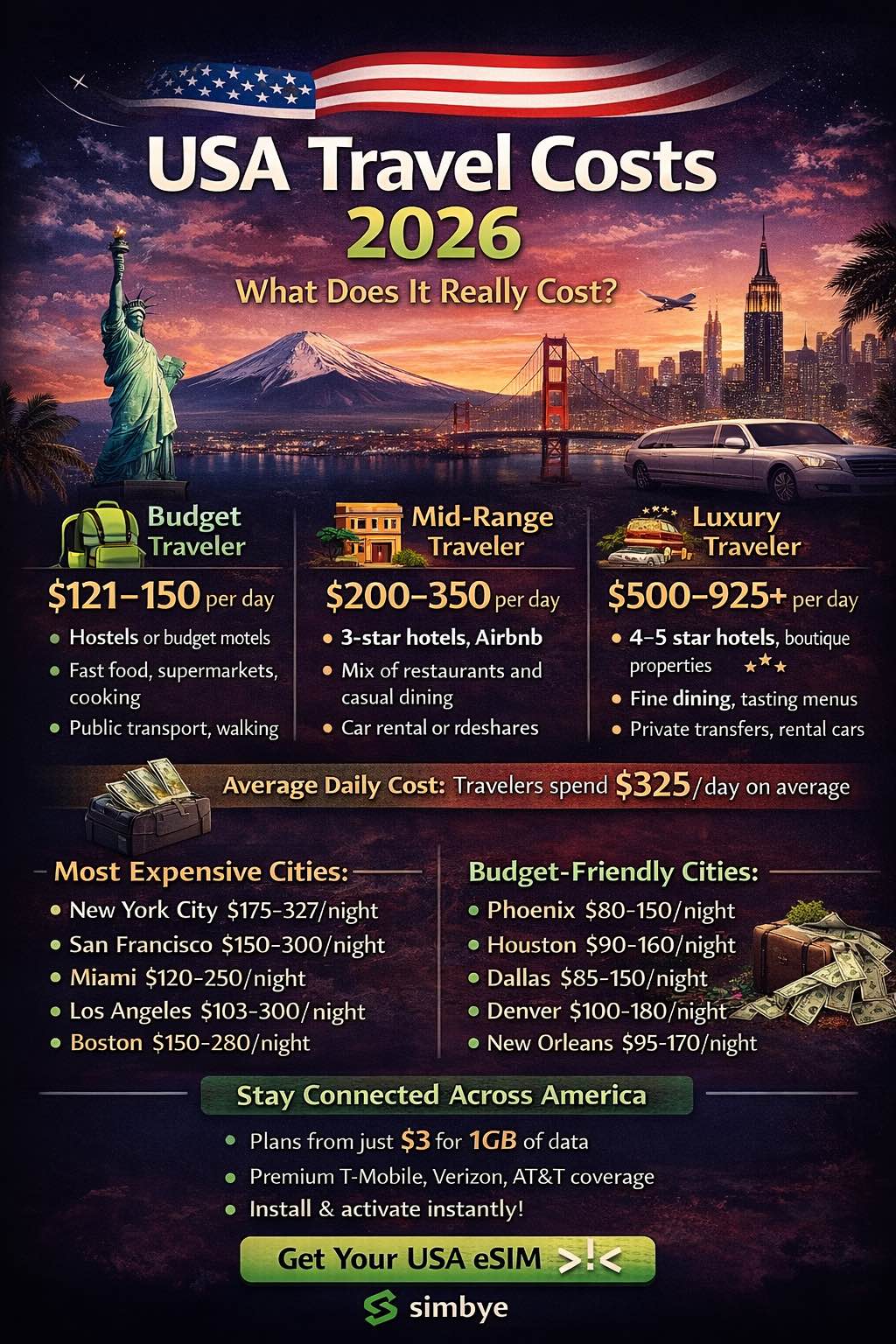
This budget shows it’s possible to travel the USA for under $70–$110 per day, especially if you mix in free activities and cook some meals yourself.
Safety And Practical Tips
Traveling on a budget doesn’t mean risking your safety. The USA is generally safe for tourists, but here are some tips:
- Always keep your valuables (passport, cash, credit cards) secure, especially in hostels and public places.
- Use ATMs in bank branches, not random machines, to avoid high fees and scams.
- Have travel insurance—it’s worth the small extra cost for peace of mind.
- Know tipping customs: In restaurants, tip 15–20%. For taxis and delivery, $1–$2 is common.
Extra tip: Many US cities have neighborhoods that are safer than others. Check online forums and ask locals if you’re unsure where to stay.
Frequently Asked Questions
What Is The Cheapest Way To Travel Across The Usa?
The cheapest way is usually by bus (like Megabus or Greyhound), especially if you book in advance and travel between major cities. For long distances, consider discount airlines. If you’re traveling with friends, renting a car and sharing costs can also be very affordable.
Can I Visit Us National Parks On A Budget?
Yes! Buy the America the Beautiful Pass if you plan to visit several parks—it covers entrance fees for over 2,000 sites. Camp inside the parks for the lowest accommodation cost, and bring your own food to avoid expensive park restaurants.
How Can I Find Free Things To Do In Us Cities?
Check local tourism websites, event calendars, and community centers for free events. Many cities have free museums, festivals, outdoor concerts, and parks. Walking tours and city markets are also great for free entertainment.
Is It Safe To Use Couchsurfing Or House-sitting In The Usa?
Both are generally safe if you use well-known platforms, read reviews, and communicate clearly with hosts. Always have a backup plan in case something doesn’t feel right. Trust your instincts and share your travel plans with a friend or family member.
Where Can I Learn More About Traveling The Usa On A Budget?
There are many travel blogs, forums, and official resources. For official travel information, visit the USA.gov Travel page for tips, maps, and links to state tourism sites.
Traveling the USA on a budget is possible, and with the right choices, you can have an unforgettable adventure without overspending. Smart planning, an open mind, and a few insider strategies are all you need to see America for less.
Safe travels!